

AI Summary
Drawing on EQ Brand’s experience helping organisations develop and refine their verbal identity, this guide explains how brand voice drift happens and how to bring communication back into alignment.
Brand voice drift occurs when an organisation’s communication gradually loses consistency across teams, channels and contributors. Common signs include conflicting tones, generic
language, inconsistent terminology and a voice that no longer reflects the brand’s current audience or strategy.
A verbal identity audit can help identify where the drift has occurred. Clear voice principles, practical guidelines, approved examples, team training and regular reviews can then restore consistency without making every channel sound identical.
Brand voice rarely changes through one obvious decision. It usually drifts gradually as new employees, agencies, platforms and campaigns introduce different interpretations of how the organisation should communicate.
Each piece of content may appear well written, yet the overall brand begins to feel inconsistent. The website sounds formal, social media becomes overly casual and sales materials use terminology that customer service teams do not recognise.
Consistency does not require identical language everywhere. A complaint response should not sound like a promotional campaign, but the brand’s personality and communication principles should remain recognisable across every channel.
What Is Brand Voice Drift?
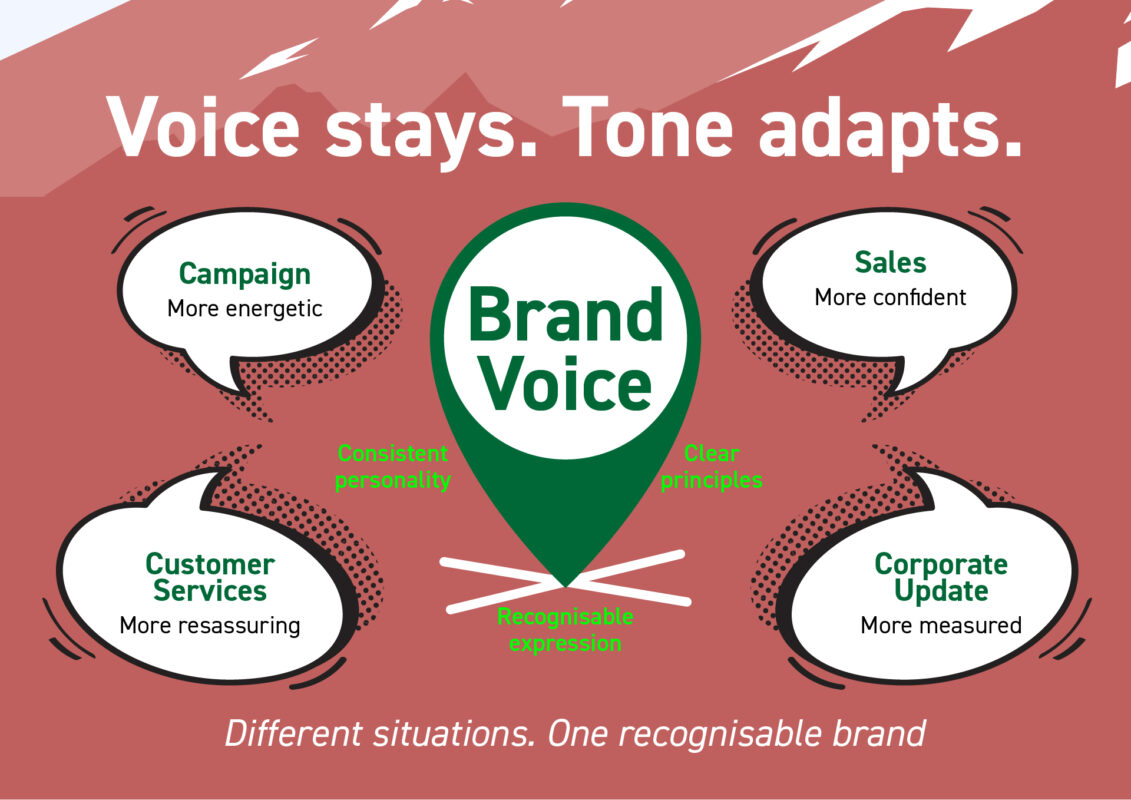
Brand voice drift is the gradual gap between an organisation’s intended verbal identity and the language used in everyday communication.
A verbal identity defines how a brand expresses itself through words. It may cover tone of voice, vocabulary, messaging principles, sentence structure, storytelling style and naming conventions.
Brand voice reflects the organisation’s consistent personality, while tone adapts that personality to a particular audience or situation. A confident brand may sound reassuring when addressing a complaint and more energetic during a campaign, but both communications should still feel connected.
Voice drift occurs when these variations lose their shared foundation.
Why Does Brand Voice Drift Happen?
Drift becomes more likely as an organisation grows and more contributors become involved in creating content. Employees, departments, agencies and freelancers may each bring their own writing preferences.
Incomplete guidelines can worsen the problem. Descriptions such as “professional yet friendly” offer little direction on vocabulary, sentence style or tone across different situations.
New platforms, leadership changes and updated business strategies can also create inconsistencies. Generative AI may amplify them when teams use generic prompts and publish content without careful review.
In most cases, drift reflects the absence of a shared framework or poor implementation rather than weak writing.
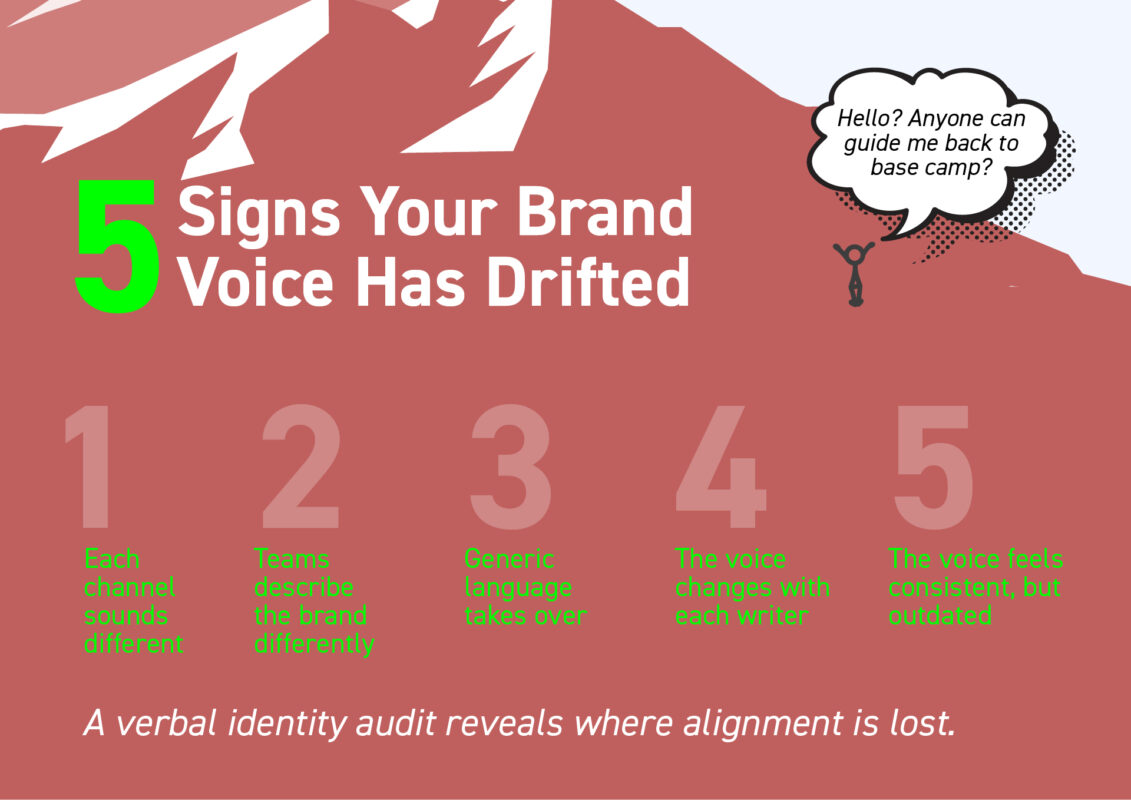
Sign 1: Different Channels Sound Like Different Brands
The website may sound authoritative, while social media relies on slang that feels disconnected from the organisation. Sales emails may be hesitant and technical, while advertising makes exaggerated claims.
Some variation is appropriate, but there should still be a recognisable personality connecting each channel.
How to Fix It
Collect representative samples from the website, social media, advertisements, proposals, newsletters and service communications.
Compare their confidence, warmth, formality, vocabulary and clarity. Identify which differences suit the context and which indicate inconsistency.
Create examples showing how the same voice should adapt across marketing, sales, corporate and customer service communication.
Sign 2: Teams Describe the Brand Differently
Voice drift often begins internally. Marketing may see the brand as bold and progressive, while leadership considers it established and conservative. Sales may emphasise expertise, while customer service prioritises warmth.
These conflicting interpretations can result in different personalities across campaigns, proposals, recruitment materials and service messages.
How to Fix It
Conduct interviews or workshops with key departments. Ask participants to describe:
- The brand’s personality
- How audiences should feel
- Words the brand should use or avoid
- How it differs from competitors
Use the responses to identify disagreements and define one shared verbal direction.
Sign 3: Generic Language Replaces Distinctive Expression
Phrases such as “innovative solutions”, “trusted partner”, “seamless experience” and “customer-centric approach” appear across many industries.
While positive, these expressions reveal little about what makes the organisation different. They often appear when writers lack approved language, rely on templates or imitate competitors.
How to Fix It
Audit recurring headlines, claims and phrases. Highlight language that lacks evidence or could belong to almost any competitor.
Replace broad statements with concrete benefits and proof. Rather than promising a seamless experience, explain what has been simplified, how the process works and why it is easier for customers.
Distinctive language should reflect the organisation’s actual expertise, culture and customer promise.
Sign 4: The Voice Changes with Every New Writer or Agency A strong brand voice should not depend on one employee, freelancer or agency.
Without clear guidance, contributors rely on personal preferences. One writer may favour short, direct sentences, while another uses elaborate language. Customers should not be able to identify who produced each piece of communication.
How to Fix It
Create practical verbal identity guidelines covering:
- Core voice principles
- Tone variations
- Preferred vocabulary
- Sentence style
- Messaging priorities
- Approved and discouraged phrases
- Before-and-after examples
Avoid vague descriptions. If the voice should be confident, explain how confidence differs from arrogance. If it should be approachable, show how to create warmth without becoming overly casual.
The guidelines should form part of onboarding for employees and external partners.
Sign 5: The Voice Sounds Consistent but Outdated
A brand may follow its guidelines accurately while sounding disconnected from its current audience or strategy.
The voice may have been developed when the organisation served different customers, operated in fewer markets or offered a narrower range of services. Language that once felt suitable may now seem too formal, technical or restrictive.
How to Fix It
Assess whether the existing voice still supports the organisation’s positioning, audience and commercial direction.
Retain elements that remain distinctive, but revise language that has become limiting. This may involve adjusting formality, simplifying terminology or expanding the brand’s emotional range.
The aim is controlled evolution instead of abandoning the identity completely.
Once you can recognise these five signs in your own communication, the next step is to run a structured audit to see where the drift is happening.
How to Conduct a Verbal Identity Audit
A structured audit can reveal where inconsistencies occur and which corrections matter most.
| Audit Step | What to Review |
| Collect samples | Gather website pages, social posts, advertisements, emails and proposals. |
| Group by source | Compare content from different teams, markets, writers and agencies. |
| Assess the
voice |
Review confidence, warmth, formality, clarity and vocabulary. |
| Check alignment | Determine whether the language supports the brand’s positioning and promise. |
| Identify gaps | Highlight generic claims, conflicting terminology and abrupt tonal shifts. |
| Prioritise
updates |
Correct high-visibility and high-risk touchpoints first. |
Customer and employee feedback can supplement the review. Competitor analysis may also reveal where the brand has adopted category clichés or lost distinctive expressions.
How to Bring the Brand Voice Back into Alignment
Begin by reviewing the strategic foundation. The verbal identity should reflect the organisation’s audience, positioning, personality and promise.
Next, define three to five voice principles with practical explanations. Avoid unsupported descriptions such as “professional but friendly”.
Establish how the tone should adapt across campaigns, corporate announcements, complaints, sales communication and social media.
Templates, vocabulary lists, editorial checklists and approved examples can make the voice easier to apply. Teams and external partners should also receive training, as guidelines alone cannot correct drift without consistent use and feedback.
How to Prevent Future Voice Drift
Assign clear ownership of the verbal identity and include voice checks in the content approval process.
New employees, freelancers and agencies should receive the guidelines during onboarding. Maintaining a library of approved examples gives contributors practical references.
Conduct a light annual audit and update the guidance when the organisation enters new markets, changes its positioning or adopts new communication platforms.
AI-generated content should always undergo human review. Approved prompts can improve consistency, but they cannot replace informed editorial judgement.
A Consistent Voice Makes the Brand Easier to Recognise
Brand voice drift can weaken recognition even when individual pieces of content are professionally written. The problem lies in the absence of a consistent personality connecting the organisation’s messages.
The objective is not to make every channel sound identical. It is to establish a verbal identity that adapts to different situations without losing its essential character.
Organisations seeking to strengthen their brand voice can contact EQ Brand for support with verbal identity audits, messaging development, voice guidelines and team alignment.
Frequently Asked Questions
Can departments use different tones?
Yes. Customer service may sound more reassuring than advertising, but both should follow the same vocabulary, personality and communication principles.
How often should verbal identity guidelines be reviewed?
A light annual review helps keep terminology and examples current. A more extensive review may be needed after major changes in positioning, audience, services or markets.
Is voice drift always caused by weak guidelines?
No. Strong guidelines may still fail if teams cannot access them, do not understand them or receive little feedback. The audit should assess both the content and implementation of the guidance.
Can generative AI cause voice drift?
Yes. AI tools often produce generic or inconsistent language when given limited direction. Approved prompts, examples and human review can reduce this risk.
Should all existing content be rewritten?
Usually not. Prioritise high-traffic pages, sales materials and customer communications, then update lower-priority content gradually.

