

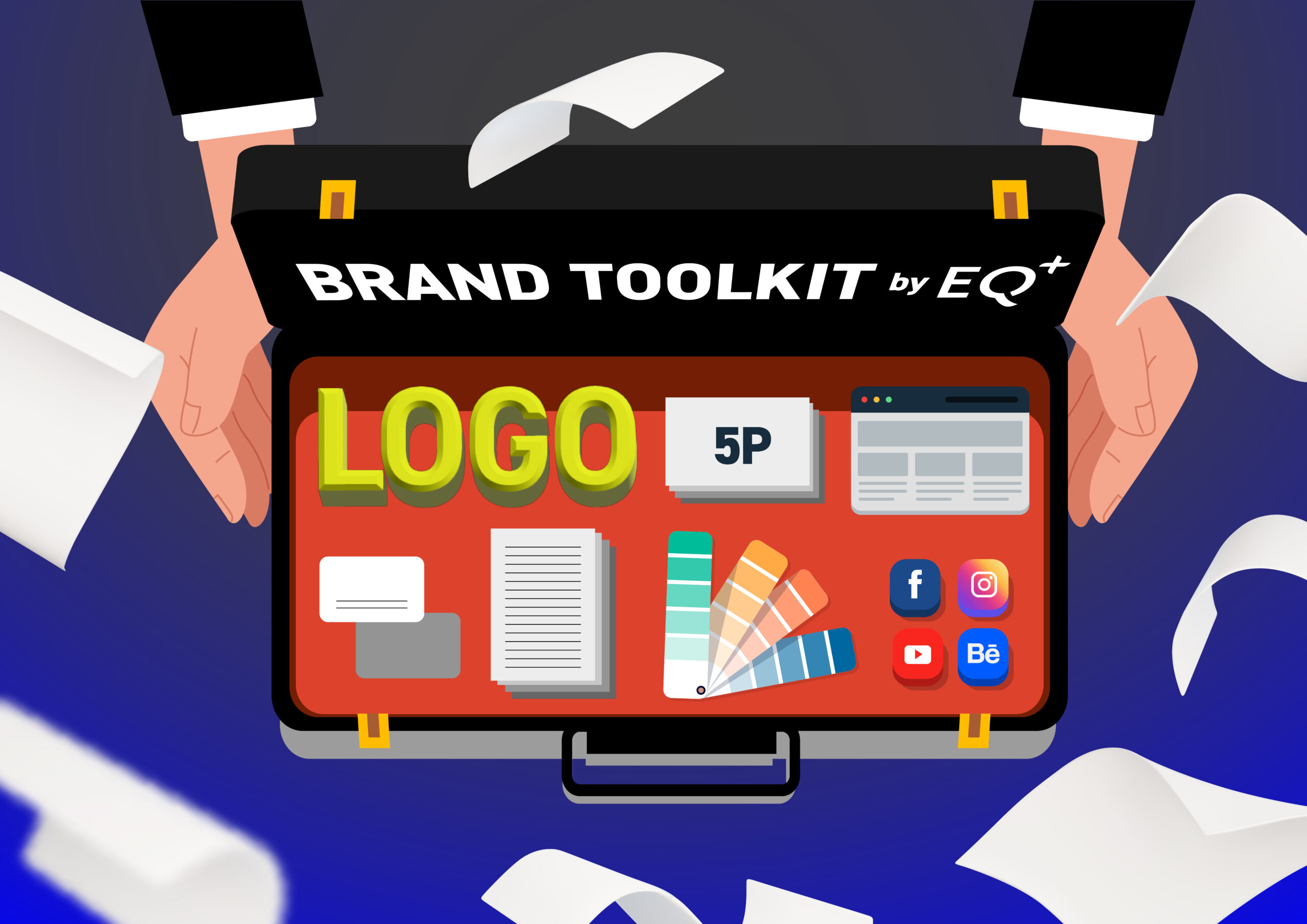
You may already have the basics in place: a logo, a colour palette, a type system, and a PDF that explains how they should be used. That is a solid start. But once your business begins to scale across teams, channels, campaigns, products, or markets, those rules alone can no longer carry the weight.
You see the symptoms quickly. Sales uses an old deck. Marketing creates work that looks right but sounds off. HR improvises employer branding materials. External partners request “the latest files,” but receive three different versions. The issue is no longer whether your brand exists. It is whether your brand can be used properly, every day, by real people.
That is where a brand toolkit comes in. It becomes essential the moment your business outgrows a static set of guidelines.
At EQ Brand, we often see this in Singapore businesses. The challenge is rarely a lack of design. It is a lack of structure. A toolkit closes the gap between brand thinking and brand execution. It gives your team the assets, language and system to express your brand with consistency and confidence.
Key Takeaways:
- A brand toolkit helps your business move beyond static guidelines and apply the brand consistently across real touchpoints.
- When teams struggle with outdated assets, mixed messaging or slow approvals, it is often a sign that a brand toolkit is needed.
- A strong brand toolkit should include identity assets, verbal identity, execution tools and clear governance.
- For Singapore businesses managing multiple channels and stakeholders, a brand toolkit supports speed, clarity and consistency at scale.
What is a Brand Toolkit?
A brand toolkit is the practical system that powers your brand. It brings together the assets, guidance and ready-to-use resources your business needs to apply the brand properly across touchpoints.
In simple terms, brand guidelines tell you the rules. A brand toolkit helps you put them to work.
Think of guidelines as the rulebook and the toolkit as the kit bag. One sits on a shelf. The other gets opened every day, by the people writing your decks, posting your socials, briefing your printers and answering your emails.
If your brand must operate across multiple teams or contexts, a toolkit is no longer optional. It becomes part of your operating infrastructure.
Brand Toolkit vs Brand Guidelines
| Brand Guidelines | Brand Toolkit |
| Define the brand rules | Help your team use the brand correctly |
| Often static and document-led | Dynamic, usable and action-led |
| Focus on logos, colours, type and tone | Includes those plus templates, messaging, assets and workflows |
| Good for reference | Good for day-to-day application |
| Often owned by brand or design teams | Useful across marketing, sales, HR and external partners |
This is why many guidelines stop helping after the brand launch. They are written as a reference point, not built as a working system. They tell you what the brand should be, but not always how to execute it under real business pressure.
When Static Rules Stop Helping
You will usually know when your brand has crossed that line.
- Your team keeps hunting for approved assets: If people are digging through folders, email chains or past decks to find the correct logo, your system is already leaking consistency.
- Your messaging changes depending on who writes it: Your website speaks one way. Your sales deck speaks another. Your social captions sound like a third business entirely. That weakens recognition and trust.
- Brand approvals become a bottleneck: If every piece of communication has to pass through one person for correction, your brand is not scalable. A good toolkit reduces dependency without lowering standards.
- Different teams interpret the brand differently: Marketing may understand the visual system. The product may not. HR may need employer branding tools. Investor communications may require a more formal application. Without a toolkit, each team starts filling its own gaps.
- Growth exposes inconsistencies: This often happens during rebranding, brand architecture changes, new service launches, regional expansion or internal transformation. The brand looks polished at launch, but the day-to-day applications are not aligned.
Most clients come to us asking for more templates or a refresh. More often than not, that is not the real fix. The brand they already have just needs to be easier to use.
What a Brand Toolkit Should Include
A proper toolkit should reflect how your business actually works, not just how your brand looks.
Core Identity Assets
These are the fundamentals:
- Primary and secondary logos
- Colour specifications
- Typography and hierarchy
- Graphic devices
- Layout principles
- Usage examples and restrictions
These should be clear, current and easy to access.
Verbal Identity
Many businesses under-invest here. Yet verbal inconsistency is one of the fastest ways to weaken a brand.
Your toolkit should include:
- Brand story
- Positioning
- Brand promise
- Tone of voice
- Naming or nomenclature guidance where relevant
If your business has multiple services, audiences or product lines, this becomes even more important.
Execution Tools
This is where a toolkit becomes genuinely useful:
- Presentation templates
- Social media templates
- Proposal or one-page document formats
- Email signatures
- Event assets
- Basic photography guide
These are not extras. They are what help your people work faster without going off-brand.
Templates, in particular, are among the most practical elements of a brand toolkit. While guidelines define the principles behind a visual identity, templates help teams apply them across everyday communications, from presentations to social media posts. Their role is not to function as rigid, plug-and-play solutions, but to provide a clear and adaptable framework.
The best templates create consistency without becoming a constraint, giving future designers and marcom teams enough structure to keep the brand cohesive while leaving room to respond to different content needs, audiences and platforms.
Governance
A brand toolkit should also document the internal governance that supports consistent use. This is typically defined by the client, your business knows best how decisions are made, who owns the brand, and how assets flow through your teams. The toolkit’s role is to capture and structure that information so it is easy to reference. Governance usually covers:
- Who owns the brand internally
- Where approved assets are stored
- Which files should external partners use
- How updates are managed
- Whether any approval process is required
Without clear governance, even a well-designed toolkit will drift.
Why This Matters for Singapore Businesses
Singapore businesses often operate in compressed, high-speed environments. Teams are lean. Timelines are tight. The same brand may need to perform across B2B, consumer, investor, and recruitment touchpoints simultaneously. It may appear on a website, a pitch deck, a campaign video, a product pack, an event space or a wayfinding system within the same quarter.
That level of complexity quickly exposes weak brand systems.
A static guideline document may still have value as a reference. But if your business is active across multiple channels and decision-makers, your brand needs a more practical delivery system. That is why a brand toolkit is not simply a design asset. It is a business tool.
At EQ Brand, our work reflects that reality. We do not see branding as a logo exercise. Through brand consultancy, Brand DNA®, brand strategy and positioning, visual identity design, verbal identity, brand architecture, and execution across digital, packaging, and branded environments, we build brands that function in the real world.
How to Build a Brand Toolkit that Works
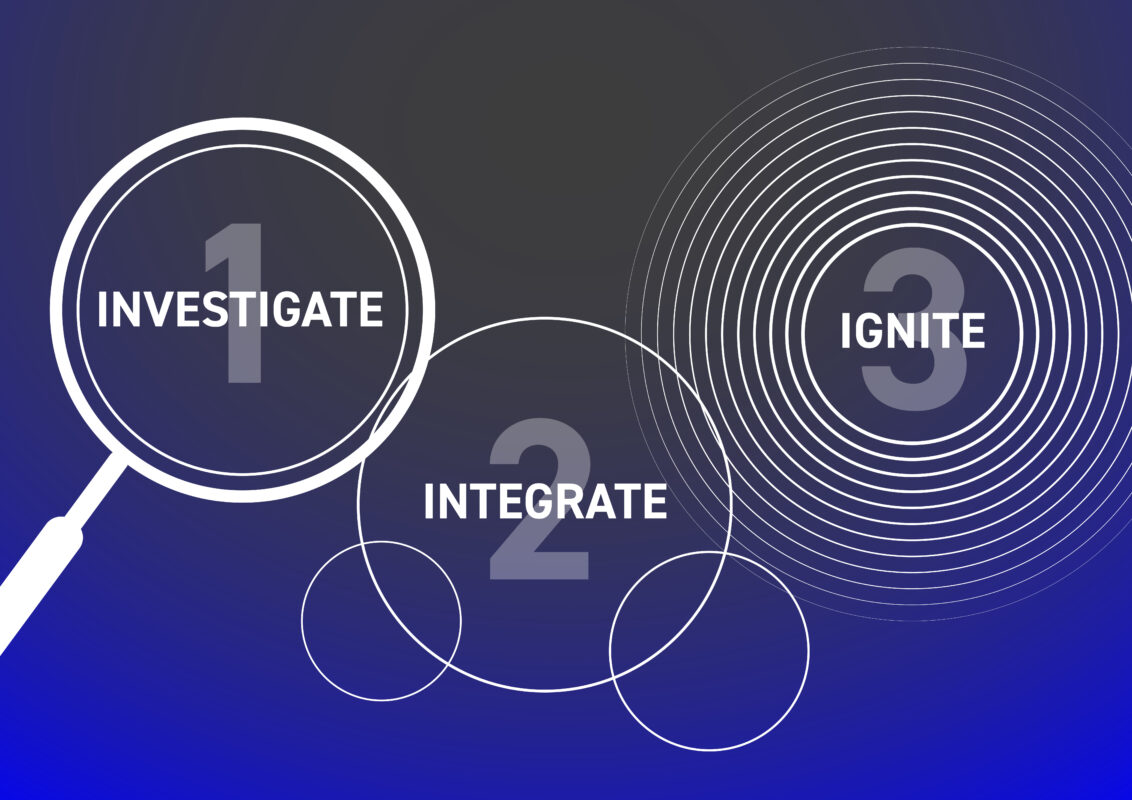
A good toolkit starts long before files are organised. At EQ Brand, our process is built around three phases: Investigate, Integrate and Ignite.
Investigate
You begin by understanding the brand properly. Through research and stakeholder input, you define the brand’s purpose, positioning, personality, promise and platform. This is the foundation of the Brand DNA®. Without this, a toolkit becomes a storage problem disguised as a brand solution.
Integrate
Next, you translate that strategy into a coherent identity system, both verbal and visual. This is where design decisions become purposeful. Not decorative. Your brand assets, messages and structure should all stem from the same strategic logic.
Ignite
Finally, you bring the brand to life across touchpoints and document how it should be used. This is where the toolkit becomes real. It supports implementation across internal and external applications, from sales materials and digital content to brand training and customer-facing experiences.
If you build a toolkit without those steps, you risk organising assets without solving the deeper issue. A useful toolkit is not just a library. It is the operational expression of a clearly defined brand.
Common Mistakes to Avoid
If you want your toolkit to deliver long-term value, avoid these traps:
- Treating it as a logo folder
- Including visuals but no messaging guidance
- Making it too complicated to navigate
- Failing to provide templates for common use cases
- Leaving ownership unclear
- Not updating it as the business evolves
The best toolkits are clear, disciplined and practical. They reduce confusion rather than add another layer of documentation.
From Brand Control to Brand Confidence
The real purpose of a brand toolkit is not tighter control for its own sake. It is confidence.
It gives your team the confidence to create without second-guessing. It gives your partners the confidence to represent your business properly. It gives your audience a more consistent experience of who you are, what you stand for and why you matter.
That is the shift many businesses need. Not more rules. Better application.
At EQ Brand, we believe strong brands are built with clarity, then carried through with discipline. If your current brand guidelines are static, fragmented, or no longer align with how your business operates, it may be time to move beyond them.
A brand toolkit does not replace strategy. It proves that your strategy can live. And if your brand needs to work harder across more touchpoints, that makes all the difference. Let EQ Brand help you. Give us a call today to know more.
Frequently Asked Questions
What format is a brand toolkit usually delivered in?
A brand toolkit is typically provided as a PDF for easy reference, sharing and distribution across teams. The original working files are usually retained separately to protect the integrity, accuracy and consistency of the brand system.
Can a small business benefit from a brand toolkit?
Yes. A brand toolkit helps a small business stay consistent, save time and look more credible across customer touchpoints.
How often should you update a brand toolkit?
Update your brand toolkit whenever your brand changes in a meaningful way. An annual review, plus updates whenever the brand changes in a meaningful way, is a good baseline.
What files come with a brand toolkit include?
A brand toolkit is usually delivered as a PDF guide that explains how to use the brand correctly. Alongside that, clients may also receive working files for practical assets and templates, such as vector logo files, PNGs, JPGs, and editable template files for day-to-day use.
What is the difference between a brand toolkit and a media kit?
A brand toolkit helps teams apply the brand consistently. A media kit is designed for press and external publicity, with company facts and approved media assets.

