


A strong brand architecture strategy is essential for any business looking to grow without confusion. Whether you’re managing multiple product lines or planning a rebranding exercise, a clear structure keeps your brand consistent, organised and easy to understand. At its core, brand architecture defines how an organisation structures and communicates the relationships between its corporate brand, divisions, business units, joint ventures, alliances, products and services. It guides how brand value is centralised, organised and distributed across the business; ensuring clarity internally, coherence externally, and most importantly, managing the expectations of the brand’s key target audiences to maximise overall brand value.
Without this foundation, brands often send mixed messages, lose recognition, or struggle to expand effectively. But with the right approach and by using models like monolithic, endorsed, or freestanding, you can build a brand ecosystem that drives clarity, supports communication, and scales with your business.
In this article, we will explore what brand architecture means, how it works, and how to choose the best model for your company’s goals.
What Is Brand Architecture?
Brand architecture is the framework that organises your brand, sub-brands, products, and services. It defines how they relate to each other and to your audience.
Think of it as a family tree for your brand. It helps both your team and your customers understand the relationships within your brand portfolio. A strong brand architecture gives structure, clarity, and consistency—making your messaging more effective and easier to scale.
Types of Brand Architecture Models
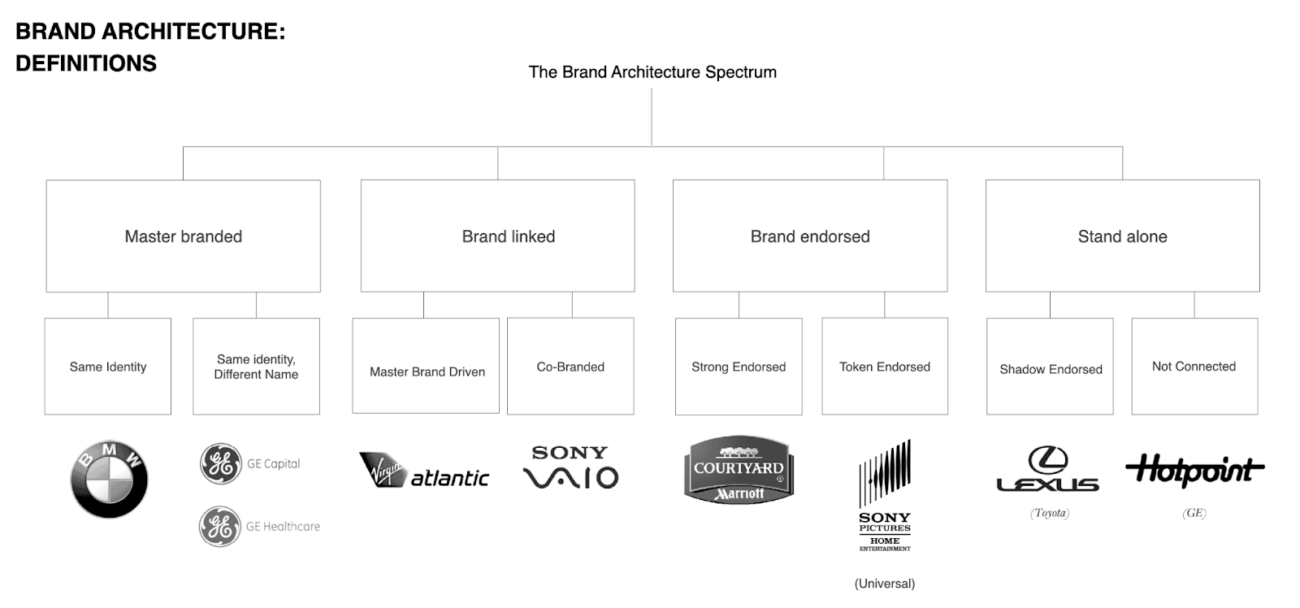
There are three common types of brand architecture models. Each one serves a different purpose depending on your goals, size, and business structure.
1. Monolithic (Branded House)
A monolithic structure means the parent brand is the dominant identity, and all products or services follow its naming and visual system.
Example: Google – Gmail, Google Maps, Google Drive
Pros:
- Strong, unified brand presence
- Easier to manage and market
- Builds trust quickly through brand consistency
Cons:
- If one product fails or faces negative attention, the whole brand could be affected
2. Endorsed Brand
In this model, each sub-brand has its own identity but is supported by the parent brand’s name or logo.
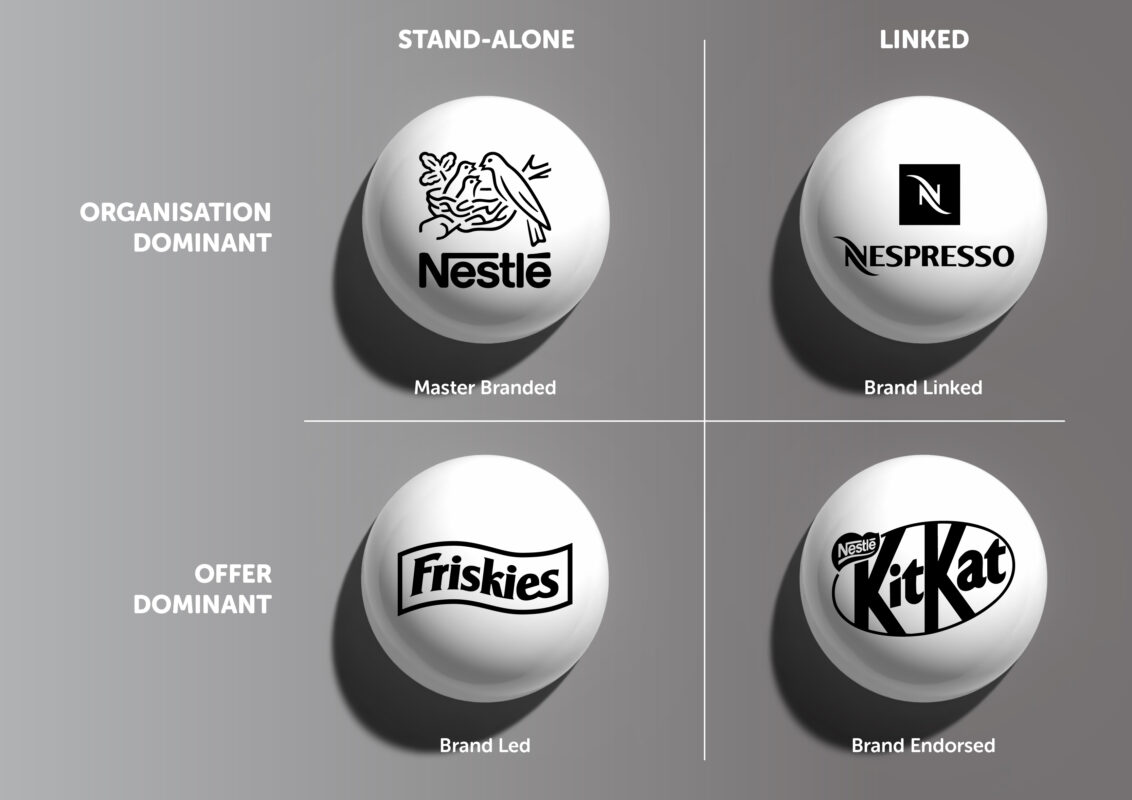
Example: Nestlé – KitKat, Nespresso, Friskies
Pros:
- Sub-brands benefit from the parent brand’s reputation
- Flexibility in branding while maintaining trust
Cons:
- Needs careful alignment between the parent and sub-brands
- More complex than a monolithic system
3. Freestanding (House of Brands)
A freestanding model gives each brand full independence with no clear link to the parent brand.
Example: Procter & Gamble – Pampers, Tide, Gillette
Pros:
- Maximum creative freedom for each brand
- Brand issues are isolated and don’t affect the parent company
Cons:
- High cost and effort to maintain individual brands
- Little brand equity is shared between sub-brands
How to Choose the Right Model for Your Business
Selecting the best brand architecture depends on several factors:
- Business goals – Are you focused on growth through new products, or do you want to build equity in one name?
- Customer expectations – Do your audiences expect a consistent experience or tailored offerings?
- Brand equity – Does your current brand carry strong recognition that new products can benefit from?
- Scalability – Will this structure still work if you expand into new markets or services?
For many growing companies, a hybrid approach (a mix of the above) can also work—if it’s done strategically.
Benefits of a Clear Brand Architecture Strategy
Getting your brand architecture right has several advantages:
- Improved communication: Both internally and externally, messaging becomes clearer and easier to understand
- Stronger brand recognition: Audiences start to connect your offerings back to the brand’s overall value
- Better navigation: Customers can easily explore your products and services without confusion
- Supports growth: A scalable system makes it easier to add new brands or products in the future
- More efficient marketing: Resources can be shared or focused depending on your brand hierarchy
Common Mistakes to Avoid
When working on brand architecture, steer clear of these pitfalls:
- Too many brands or layers that confuse instead of simplify
- Ignoring customer perceptions and focusing only on internal logic
- Lack of alignment between departments or teams
- Mixing brand models without strategy, which leads to inconsistency
Examples of Brand Architecture in Action
Let’s look at how different companies apply brand architecture:
- Google uses a branded house model. All their products carry the “Google” name, creating a unified experience.
- Nestlé supports its brands like KitKat with the Nestlé name, using an endorsed model.
- Unilever manages many independent brands like Dove and Ben & Jerry’s, following a house of brands approach.
These companies succeed because their brand structures align with their strategies and customer needs.
Steps to Build or Refine Your Brand Architecture
If you are ready to improve your brand architecture, here’s how to begin:
- Audit your current brands and sub-brands
- Map out relationships and identify overlaps or confusion
- Define your business goals and vision
- Choose the right model that supports clarity and growth
- Create clear guidelines for naming, visuals, and brand roles
- Communicate internally and train teams to use the new structure
- Review and refine regularly as your business evolves
Why EQ Brand Is Your Partner in Brand Architecture Strategy
At EQ Brand, we understand how important it is to build your brand on a solid foundation. A strong brand architecture strategy not only brings clarity, it supports long-term growth and sets the stage for future expansion.
Whether you are launching new offerings or preparing for a full rebranding strategy, we help you structure your brand in a way that makes sense for both your audience and your team. From audits to architecture models and brand rollout, our expert team guides you through every step.
Let EQ Brand help you design a brand ecosystem that’s clear, scalable, and built for success. Contact us today to start your journey towards a stronger, smarter brand.

