

AI Summary
A branding project in Singapore may take anywhere from four weeks for a focused logo refresh to 12 months for a complex regional or multi-brand programme. Costs can also vary considerably, depending on the level of research, strategic development, creative work and implementation support required.
Businesses should define their objectives, deliverables, decision-makers and launch schedule before requesting a quotation.
Working with an experienced Singapore branding company can help ensure that the project is built on a clear strategy and implemented consistently across digital, physical and customer-facing touchpoints.
When organisations begin planning a branding project, two questions usually come first: how long will it take, and how much will it cost? The honest answer is that both depend heavily on the organisation’s goals, the number of stakeholders involved and the scope of work required.
Logo design, for example, can take significant time because it requires a visual identity that is distinctive, appropriate and accepted by key decision-makers. A broader branding project may also include positioning, messaging, an identity system and application across websites, packaging, signage and customer-facing environments.
At EQ Brand, we have worked with organisations across aviation, arts and culture, technology, financial services, and food and beverage since 1994. The timelines and cost ranges below are indicative planning figures rather than fixed quotations. Every branding project should be assessed according to its strategic, creative and implementation requirements.
Key Takeaways
- Branding timelines vary by scope. A logo refresh may take four to 12 weeks, while a full rebrand can take several months to a year.
- Costs extend beyond design. Research, positioning, messaging, brand architecture, guidelines and implementation all affect the quotation.
- Clear decision-making keeps projects on track. Appoint a core team, name the final approver and consolidate feedback.
- A detailed brief improves quotation accuracy. Include objectives, audiences, deliverables, markets, budget and launch date.
- The right partner combines strategy and creativity. An experienced Singapore branding company can build a coherent brand and apply it consistently across key touchpoints.
What Does a Branding Project Actually Include?
Branding goes beyond creating a logo. It defines what an organisation stands for, how it differs and how it should present itself consistently to customers, employees and stakeholders.
Projects often begin with research, including stakeholder interviews, market analysis, competitor reviews, customer insights and a brand audit. These findings shape the brand’s purpose, positioning, value proposition, personality, architecture and key messages.
The visual and verbal identity may then cover the logo, colour palette, typography, imagery, naming, messaging and tone of voice. These elements are documented in brand guidelines and applied across relevant touchpoints.
EQ Brand’s services span strategy, visual and verbal identity, customer journey mapping, packaging, digital media, branded environments, signage, exhibitions and brand training.
Typical Branding Project Timelines in Singapore
The timeline depends on the depth of research, the number of deliverables and the complexity of the approval process.
| Branding project | Indicative
timeline |
Typical scope |
| Complete company
rebrand |
3 to 6 months | Research, positioning, identity, messaging and rollout planning |
| Logo refresh | 4 to 8 weeks | Updated logo, colours and basic usage guidelines |
| Brand identity
development |
8 to 14 weeks | Brand strategy, visual system and brand guidelines |
| Regional or multi-brand programme | 6 to 12 months | Multi-market research, brand architecture and phased implementation |
A focused identity refresh may move relatively quickly when the organisation already has clear positioning and a small decision-making team.
A complete rebrand takes longer because the agency must understand the business, align stakeholders, establish the strategy and translate it into a coherent identity system.
Timelines may also extend when research is conducted across several markets or when the identity must be applied to numerous physical and digital assets.
How Much Does a Branding Project Cost in Singapore?
Branding fees can vary significantly between freelance designers, small studios and established consultancies. The following figures provide a general starting point for budget planning.
| Project scope | Indicative planning range |
| Basic identity or logo refresh | S$5,000 to S$15,000 |
| Strategic brand identity project | S$15,000 to S$50,000 |
| Full corporate rebranding | S$50,000 to S$150,000 or more |
| Regional or multi-brand programme | Custom quotation |
These figures are indicative planning ranges for general reference only. Please contact EQ Brand for a detailed quotation based on your specific project requirements.
A branding budget is shaped by the depth of work needed, not only by the number of final deliverables. A focused identity project may centre on refining an existing logo, colour palette, typography and basic brand guidelines.
Projects with broader business objectives often require more groundwork. This can include stakeholder or customer research, brand positioning, messaging and a more comprehensive visual identity system. For a full rebrand, the scope may extend further to brand architecture, naming, verbal identity, digital applications, packaging and internal engagement.
Some implementation costs may sit outside the core branding scope. Website development, printing, production and installation, for example, are often quoted separately. When comparing proposals, it is therefore helpful to look beyond the total fee and consider the research, strategy, deliverables and rollout support included in each scope.
What Determines the Final Branding Cost?
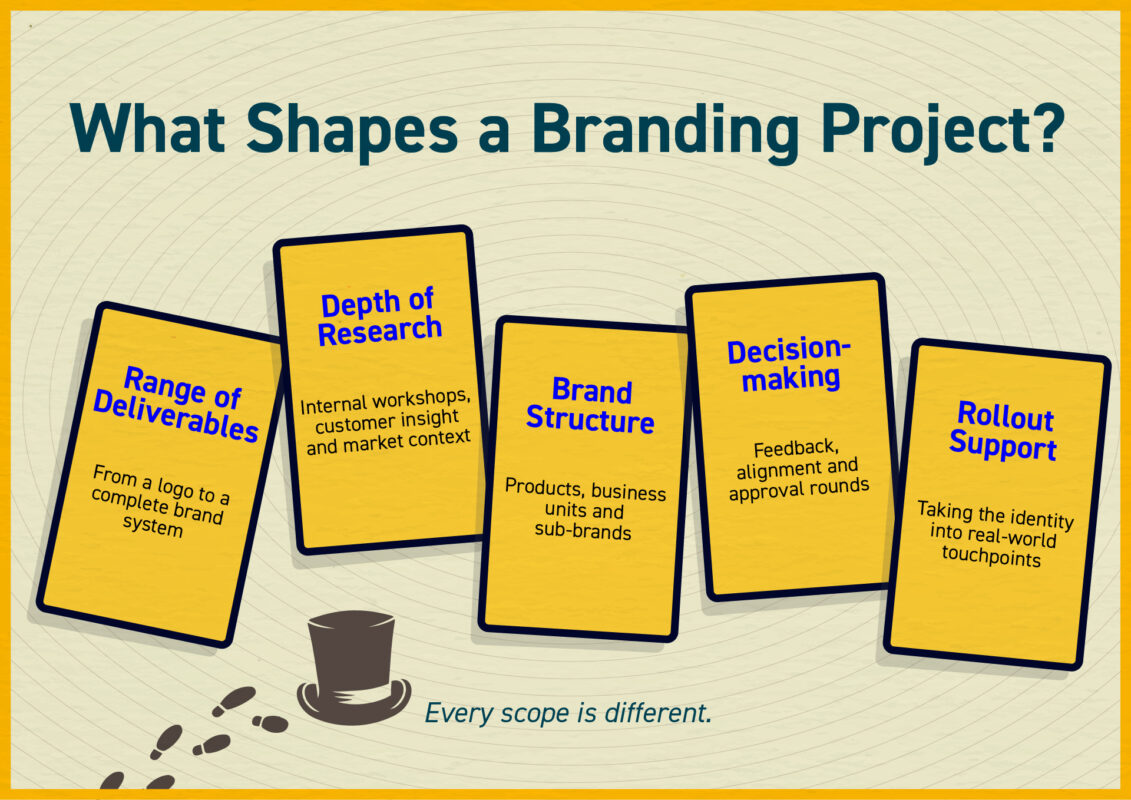
A branding quotation is not based on creative execution alone. The final cost is shaped by the scale of the work, the level of strategic input required and how far the brand needs to be applied after the identity is developed. Here are five factors that commonly affect the scope.
1. The range of deliverables
A logo and basic stationery require a different level of work from a full suite of brand applications. Costs increase when the project includes packaging, a website, uniforms, signage, publications or campaign materials, as each application needs to work consistently within the new identity.
2. The depth of research
Some projects can begin with internal stakeholder workshops. Others require customer interviews, market research or input from several countries before the strategic direction is clear. A more extensive discovery phase naturally requires additional time and resources.
3. The organisation’s brand structure
A business with one offer is usually more straightforward to brand than an organisation with multiple products, business units or subsidiaries. In these cases, brand architecture may be needed to establish how each brand relates to the wider organisation.
4. The decision-making process
Branding projects involve feedback, refinement and approval at key stages. Where several departments, senior leaders or regional offices are involved, the project may need more presentations and revision rounds to build alignment.
5. The level of rollout support
Some organisations need an identity system and clear guidelines for their internal teams to implement. Others require support in applying the brand across packaging, digital platforms, environmental graphics, employee training and launch communications.
A Realistic Branding Project Process
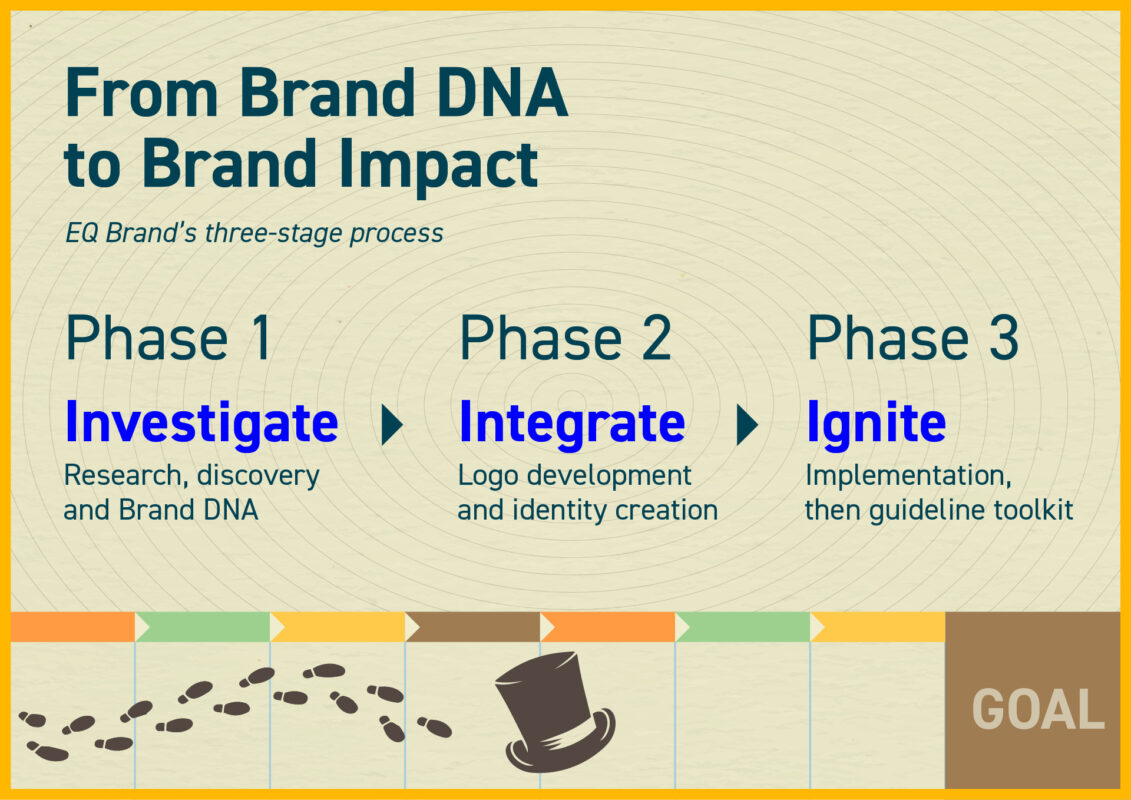
An experienced Singapore branding company will normally divide the engagement into structured phases rather than moving directly into logo design.
Phase 1: Investigation and Brand Strategy
This first phase brings discovery and strategy together. We investigate the organisation, its customers, competitors, commercial objectives and existing reputation in order to establish a clear foundation for the brand.
The findings are then developed into the brand strategy, including its purpose, positioning, personality, values and key points of difference. At EQ Brand, this stage forms the Investigate part of our methodology, where we develop the Brand DNA that guides the work that follows.
Phase 2: Brand Creation
With the Brand DNA as the foundation, we create the logo and visual identity. This phase often takes four to eight weeks, allowing time to explore initial creative directions, gather feedback and refine the preferred concept into a distinctive, usable identity system.
This is the Integrate stage of our methodology, where the strategy is translated into a visual identity that reflects the organisation’s character and direction.
Phase 3: Brand Expression + Brand Toolkit
Implementation comes before the final guidelines because applying the identity across real touchpoints helps define how the system needs to work in practice. Depending on the scope, this phase may take four to 12 weeks.
The identity may be applied across agreed assets such as websites, packaging, marketing materials, uniforms or physical spaces. These applications are then brought together in a practical brand guideline toolkit to support consistent use across the organisation. This reflects the Ignite stage of our methodology, where the new brand is prepared for launch and ongoing use.
Why Branding Projects Get Delayed
Branding timelines can sometimes extend when several stakeholders are involved in reviewing creative work. Design is naturally subjective, and different preferences can lead to additional discussion, feedback and refinement before a direction is approved.
Clear decision-making roles, consolidated feedback and agreed review dates can help keep the project moving while ensuring key voices are heard.
Scope expansion is another common cause. A project that begins with a corporate identity may gradually grow to include naming, packaging, website design, photography and campaign development.
Organisations can reduce delays by appointing a core project team, identifying the final decision-maker and agreeing on approval stages at the beginning.
Feedback should be consolidated before it is sent to the agency so that the creative team receives one clear direction rather than several contradictory opinions.
How to Request an Accurate Branding Quotation
A useful branding brief should explain the business objectives, current brand challenges, intended audience, required deliverables and desired launch date. It should also identify the markets involved and the people responsible for approving the work.
Providing a realistic budget range helps the agency recommend an appropriate scope. Without one, the agency may prepare a proposal that is either too limited or significantly more extensive than expected.
Businesses should also provide existing brand guidelines, customer research, strategic documents and examples of current marketing materials. The more context the agency receives, the more accurately it can estimate the work required.
Choosing the Right Singapore Branding Company
A branding partner should be evaluated on more than the visual appeal of its portfolio. Businesses should consider whether the agency can conduct meaningful research, translate commercial objectives into a clear strategy and implement the identity consistently across multiple channels.
Sector experience can be useful, but strategic adaptability is equally important. EQ Brand has worked with start-ups and established organisations across Asia-Pacific, including airline, museum, education, technology, banking and F&B brands.
It also provides services across strategy, identity and execution, allowing the consultancy to consider the complete brand experience instead of treating each asset as an isolated design exercise. With the right partner identified, the next step is defining the scope clearly before finalising the budget.
Plan the Scope Before Setting the Budget
The cost and duration of a branding project should reflect the business challenge being solved. A logo refresh may take several weeks, while a strategic rebrand involving research, brand architecture and multi-channel implementation may require several months.
Before requesting a quotation, organisations should define their objectives, priority deliverables, decision-making team and intended launch date. This gives an experienced Singapore branding company enough information to recommend a realistic scope, timeline and budget rather than relying on assumptions.
Organisations planning a new identity or rebranding initiative can contact EQ Brand to discuss a tailored branding programme, project timeline and quotation based on their requirements.
Frequently Asked Questions
Can a branding project be completed more quickly for an urgent launch?
An accelerated schedule may be feasible with a tightly defined scope, prompt stakeholder access and a clear approval process. Prioritising essential assets, such as the core identity and website, can also help.
However, rushing research or strategy may weaken the final identity. A phased launch is often more practical than forcing every deliverable into an unrealistic timeline.
Should a start-up invest in full branding immediately?
A start-up may not need an extensive branding programme immediately, but it should clearly define what it offers, whom it serves and why customers should choose it.
The initial scope can focus on positioning, messaging, core identity elements and essential digital applications. The brand system can then expand as the business grows, helping control costs while establishing a consistent foundation.
Who owns the branding files after the project is completed?
Ownership and usage rights should be clearly defined in the agency agreement. Clients typically receive the approved final files and agreed usage rights once all fees are paid.
Fonts, photography, illustrations, stock assets and third-party software may require separate licences. Businesses should confirm which editable files are included, what licences apply and whether the agency retains portfolio or authorship rights.
Does a branding project include trademark registration?
Trademark searches and registration are usually separate legal services unless they are expressly included in the proposal. A branding consultancy may conduct preliminary name and visual checks, but these do not replace advice from a qualified intellectual property professional.
Businesses planning a new name or logo should consider trademark availability early in the project. Identifying legal conflicts after the identity has been approved can lead to costly redesigns, launch delays and replacement of already-produced materials.
How can a company measure whether its rebrand has worked?
Set performance indicators before the rebrand begins. These may include brand awareness, customer consideration, website engagement, lead quality, employee alignment and market perception.
Do not judge success by immediate sales alone. A rebrand may first improve recognition, consistency and understanding before supporting longer-term commercial results.
Pre-launch benchmarks and post-launch measurement provide a more reliable basis for evaluation than subjective reactions to the new identity.

