


Many organisations invest heavily in visual branding. They design logos, colour palettes, and typography systems that define how their brand looks. But branding does not end with visuals. The way a brand sounds is just as important.
This is where verbal identity comes in.
Verbal identity defines how a brand communicates through language. It determines the tone, style, and messaging used across websites, advertising, social media, and customer interactions. When done well, it allows audiences to recognise a brand purely from the way it speaks, even before seeing a logo.
Without a clear verbal identity, messaging often becomes inconsistent. Different teams may communicate in different ways, creating confusion and weakening brand recognition.
Businesses that want to build stronger brand consistency often work with a branding consultant or brand agency in Singapore to develop a structured verbal identity that aligns with their overall brand strategy.
In this guide, we explore what verbal identity is, why it matters in modern branding, and how organisations can develop a brand voice that audiences recognise and trust.
Key Takeaways
- Verbal identity defines how a brand communicates through language, tone, and messaging.
- It ensures consistency across marketing channels such as social media platforms, advertising campaigns, websites and customer communications.
- A strong verbal identity helps audiences recognise a brand even before seeing its visual identity.
- Businesses often work with brand consultants or a branding agency to develop messaging frameworks aligned with brand strategy.
- Maintaining a consistent verbal identity requires clear guidelines and structured messaging systems.
What Is Verbal Identity?
A verbal identity is the linguistic expression of a brand. It defines how a brand communicates through words, tone, and messaging across different platforms.
While visual identity focuses on how a brand looks, verbal identity focuses on how a brand speaks. It shapes the language used in marketing materials, website content, product descriptions, and customer communication.
A well-defined verbal identity ensures that every piece of communication reflects the brand’s personality and positioning.
Companies often develop verbal identity systems alongside visual branding when working with brand consultants or a branding company, ensuring that design and messaging reinforce each other.
Verbal Identity vs Brand Voice vs Tone of Voice
Although these terms are often used interchangeably, they have slightly different meanings.
| Concept | Meaning |
| Brand Voice | The core personality of how the brand speaks |
| Tone of Voice | The emotional variation used in different situations |
| Verbal Identity | The structured system that defines how a brand communicates |
The verbal identity acts as the framework that governs both brand voice and tone of voice.
Why Verbal Identity Matters in Modern Branding
In a world where brands communicate across multiple channels, consistency in language becomes essential.
Consistency Across Customer Touchpoints
Customers interact with brands through many different platforms, including websites, social media, advertising, and customer service.
Without a defined verbal identity, messaging can vary widely across these channels. A structured verbal identity ensures that the brand communicates consistently, regardless of where the message appears.
Stronger Brand Recognition
Just as consistent visual branding improves recognition, consistent language can also make a brand instantly recognisable.
Some brands become identifiable simply by the way they speak. Their vocabulary, tone, and messaging style become part of their identity.
Building Emotional Connection
Language has the power to shape how audiences perceive a brand. The right tone can make a brand feel trustworthy, approachable, innovative, or inspiring. A carefully crafted verbal identity allows brands to connect emotionally with their audiences.
Organisations often work with a branding expert in Singapore to align their messaging with their brand positioning and audience expectations.
Key Elements of a Strong Verbal Identity
A successful verbal identity system is built on several key components that guide how a brand communicates.
Brand Personality
Brand personality defines the human characteristics associated with the brand. Some brands may communicate in a confident, authoritative tone, while others adopt a friendly, conversational tone.
Defining brand personality helps ensure that messaging remains consistent across platforms.
Brand Messaging Framework
A messaging framework defines the core messages a brand communicates to its audience. This is shaped by the brand’s Positioning and Promise, which together determine what the brand stands for and what it commits to deliver. The result is marketing communication that feels clear, consistent, and aligned with the overall brand strategy.
Tone of Voice Guidelines
Tone of voice guidelines define how the brand communicates in different contexts. For example, a brand may adopt a professional tone in formal communications while using a more conversational style on social media.
Clear tone guidelines help maintain consistency across teams and campaigns.
Signature Phrases and Taglines
Memorable phrases can reinforce brand identity. Some brands develop signature lines or taglines that become closely associated with their messaging.
These phrases help audiences quickly recognise the brand’s voice.
Storytelling Approach
Storytelling plays a powerful role in branding. The way a brand tells stories about its purpose, values, and customers can shape how audiences perceive it.
Developing a consistent storytelling style helps strengthen verbal identity.
Many businesses collaborate with a brand design consultant or branding agency to build structured messaging frameworks that guide brand communication.
How to Give Your Brand a Consistent Verbal Identity
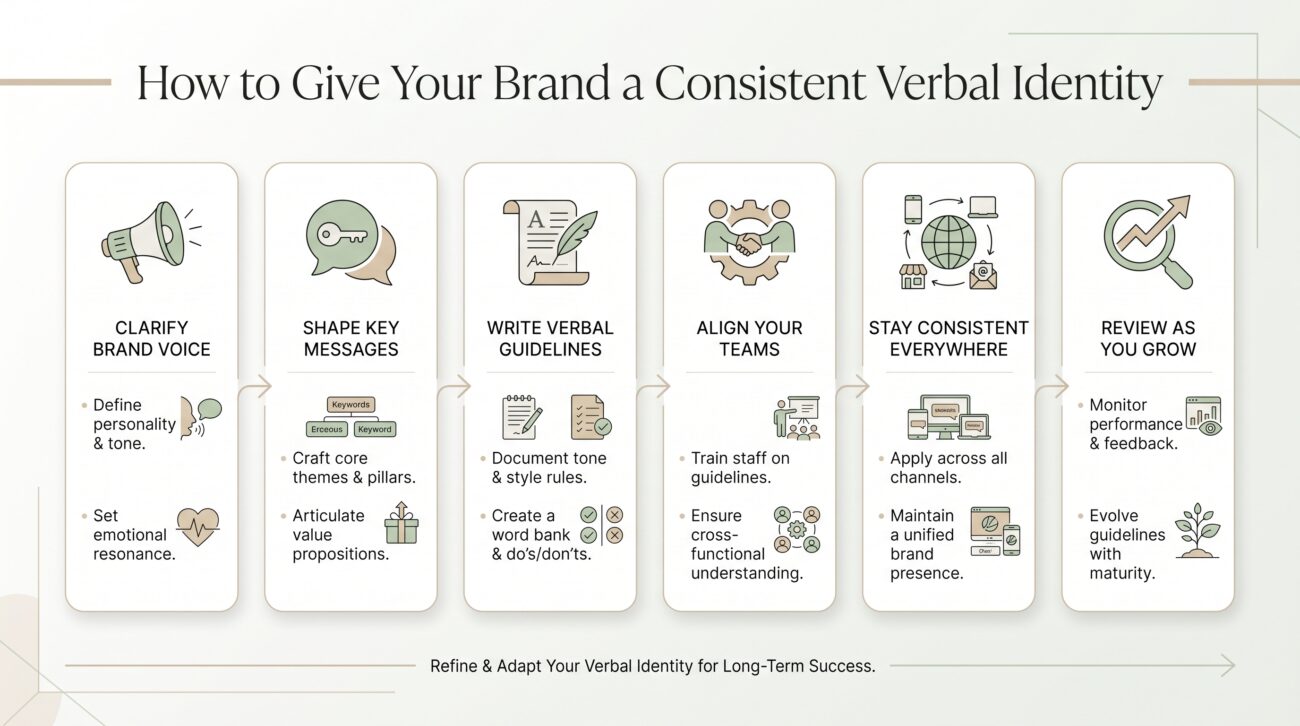
Creating a strong verbal identity is only the first step. The real challenge lies in ensuring that the brand voice remains consistent across every platform and communication channel. The following steps can help organisations maintain a clear and recognisable brand voice over time.
Step 1: Define Clear Brand Messaging Principles
Start by establishing the core messaging principles that guide how the brand communicates. This includes defining the brand personality, tone of voice and central brand promise. These principles should reflect the brand’s positioning and audience expectations, ensuring every communication feels consistent and recognisable.
Once this foundation is clear, messaging pillars can be developed to define the brand’s key recurring messages, which can then guide content themes, campaign angles and channel-specific copy.
Step 2: Create Verbal Identity Guidelines
Document the brand’s verbal identity in a structured guideline. This should outline tone of voice rules, vocabulary preferences, messaging examples, and writing style recommendations. Clear guidelines make it easier for internal teams and external partners to communicate consistently.
Step 3: Train Internal Teams and Marketing Partners
Once guidelines are created, ensure that everyone involved in brand communication understands them. Marketing teams, copywriters, social media managers, and customer service staff should all be familiar with the brand voice. Training sessions or brand workshops can help reinforce these standards.
Step 4: Apply the Verbal Identity Across All Channels
Consistency is key. The brand’s verbal identity should be applied across websites, advertising campaigns, social media, email communication, product messaging, and customer interactions. Every touchpoint should reflect the same voice and messaging style.
Step 5: Conduct Regular Content Reviews
Brands evolve, and communication practices may change as new campaigns or platforms emerge. Regular content reviews can help ensure that messaging remains aligned with the brand’s verbal identity. Periodic updates to the brand guidelines may also be necessary as the business grows.
By following these steps, organisations can maintain a strong and consistent verbal identity that audiences recognise and trust.
How a Branding Agency Develops a Verbal Identity
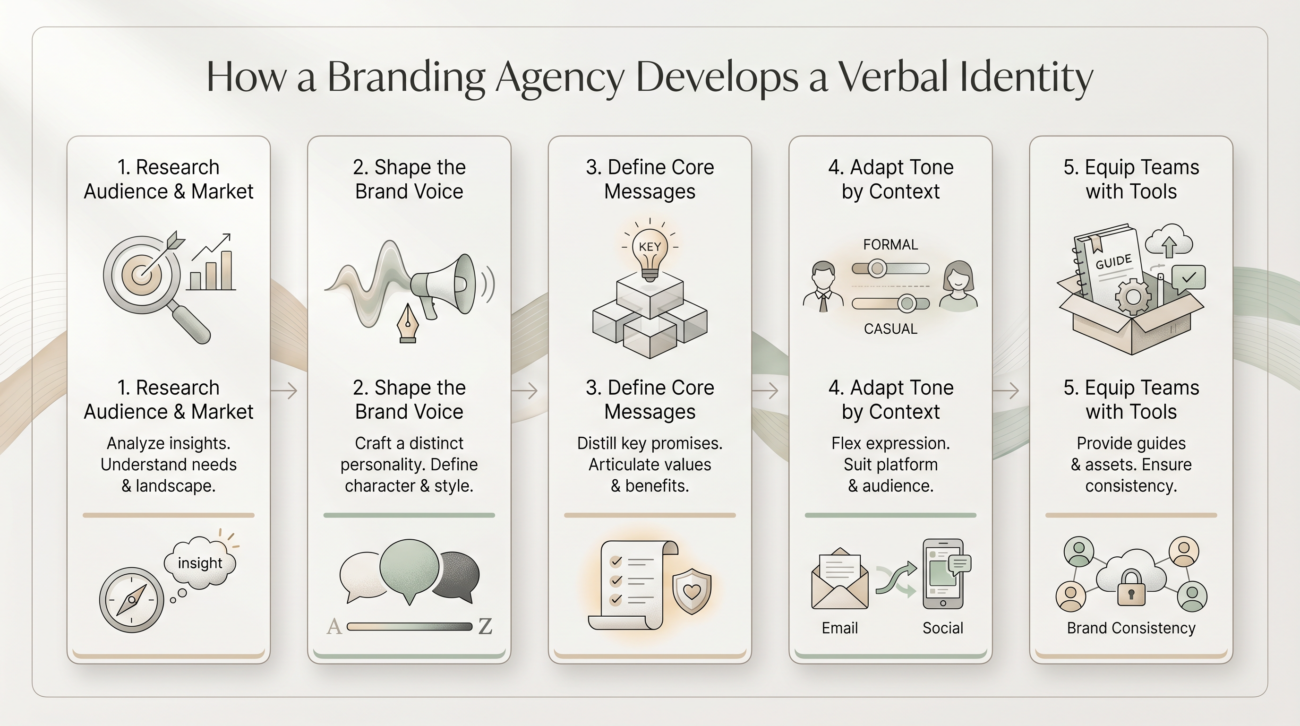
Developing a strong verbal identity is a structured process that goes beyond just picking words and phrases. It’s more about creating a unified voice that resonates with the audience and consistently reflects the brand’s core values and purpose.
Branding agencies or consultancies typically lead this process with a clear framework that ensures every message, from social media posts to marketing campaigns, aligns with the brand’s overall strategy.
Brand Strategy Discovery
The first step in developing a verbal identity is brand strategy discovery. This phase involves extensive research into the brand’s target audience, market positioning, and competitive landscape. Branding experts work closely with internal stakeholders to gain insights into the brand’s vision, goals, and values.
They also conduct a thorough analysis of the competitors’ verbal identities to identify opportunities for differentiation.
The findings from this research serve as the strategic foundation for the verbal identity, ensuring that the messaging resonates with the intended audience and reflects the brand’s unique place in the market.
Brand Voice Definition
Once the strategy is clear, the next step is defining the brand voice. The brand voice represents the overall personality and tone of the brand’s communication. This stage involves identifying the human traits that best reflect the brand’s essence, whether it’s confident, friendly, authoritative, or playful.
The brand voice is developed in alignment with the brand’s positioning, ensuring that it effectively communicates the brand’s values and connects emotionally with its audience.
A brand that positions itself as an industry leader will have a voice that is authoritative, knowledgeable, and confident, while a brand focused on creativity and innovation might have a more conversational and dynamic tone.
Tone of Voice Guidelines
While the brand voice defines the personality of the brand, tone of voice guidelines help determine how that voice should sound in various contexts. The tone can shift depending on the communication channel, audience, and purpose of the message.
For example, a brand may have a friendly tone for social media, a more formal tone for investor relations, and an inspiring tone for campaign ads.
Detailed guidelines are created to explain how the brand’s voice should be adapted for different situations. These guidelines include instructions on how to use language, punctuation, and sentence structure to maintain consistency across all content and communications.
Verbal Identity Toolkit
The verbal identity toolkit is the final output of the process. It provides a set of practical tools and resources to help teams implement and maintain the verbal identity consistently across all brand touchpoints. This toolkit typically includes:
- Messaging templates: Pre-approved language and phrases for various types of communication (e.g., social media posts, email newsletters, ads).
- Vocabulary guidelines: Specific words, phrases, and terminology that align with the brand voice, and examples of what to avoid.
- Tone of voice examples: Demonstrations of how the brand’s voice should sound in different scenarios (e.g., customer service interactions vs marketing communications).
By having these resources readily available, internal teams and external partners can ensure they’re communicating in a consistent, on-brand manner at all times.
Signs Your Brand Lacks a Clear Verbal Identity
Many organisations operate without a defined verbal identity, which often leads to inconsistent communication.
Some common signs include:
- inconsistent messaging across marketing channels
- unclear brand personality
- generic marketing language that could belong to any brand
- multiple communication styles across teams
These challenges often emerge when brands grow quickly or work with multiple marketing partners.
Businesses facing these issues may benefit from working with a brand agency in Singapore or a branding consultant to develop a structured verbal identity system.
Examples of Strong Verbal Identities
Some of the world’s most recognisable brands have developed distinctive verbal identities.
Oatly: “It’s Like Milk But Made For Humans” Campaign
Oatly’s campaign It’s Like Milk But Made For Humans became a defining moment for the brand’s verbal identity. The messaging was intentionally provocative and humorous, challenging traditional dairy industry language.
The campaign used simple, bold statements across packaging, advertising, and billboards. This distinctive tone reinforced Oatly’s rebellious and unconventional brand personality.
Mailchimp: “Did You Mean Mailchimp?” Campaign
Mailchimp’s Did You Mean Mailchimp? The campaign played with the idea that people often mispronounce the brand’s name. The campaign featured playful variations such as MailShrimp, JailBlimp, and KaleLimp.
This creative concept reinforced Mailchimp’s quirky and unconventional verbal identity while making the brand more memorable.
Building a Verbal Identity That Audiences Recognise
A strong brand identity is not defined by visuals alone. The way a brand communicates can shape how audiences perceive and remember it. Developing a structured verbal identity allows brands to communicate clearly, consistently, and authentically across every customer interaction.
Businesses looking to strengthen their brand voice often work with experienced brand consultants or a brand agency in Singapore to develop messaging systems that align with brand strategy and audience expectations.
If your organisation is exploring how to define or refine its brand voice, you can learn more about EQ Brand’s expertise. A well-defined verbal identity can help your brand stand out, build trust, and create a voice that audiences truly want to listen to. Contact us today! Let’s discuss your branding goals.
Frequently Asked Questions
How is verbal identity different from visual identity?
Visual identity focuses on how a brand looks, including elements such as logos, colour palettes, typography, and design systems. Verbal identity focuses on how a brand communicates through language, tone, vocabulary, and messaging style. Together, visual and verbal identity create a complete brand experience that audiences can recognise across different platforms.
Can verbal identity influence brand perception?
Yes. The way a brand communicates can significantly shape how audiences perceive it. Language choices, tone of voice, and messaging style can make a brand feel trustworthy, authoritative, approachable, or innovative. A clear verbal identity helps ensure that every interaction reinforces the brand’s intended personality.
What channels should follow a brand’s verbal identity?
A brand’s verbal identity should be applied across all communication channels. This includes website content, advertising campaigns, social media posts, email marketing, customer service responses, product descriptions, and corporate communications. Consistency across these touchpoints helps reinforce brand recognition.
Who is responsible for maintaining a brand’s verbal identity?
Maintaining verbal identity usually involves collaboration between brand strategists, marketing teams, copywriters, and content creators. Many organisations develop brand guidelines and messaging frameworks to ensure that internal teams and external partners communicate in a consistent voice.
Can a brand update its verbal identity over time?
Yes. As businesses evolve, their verbal identity may need to be refined to reflect new audiences, markets, or brand positioning. While the core brand voice often remains consistent, adjustments to tone, messaging, and communication style may help the brand stay relevant in changing market conditions.

