

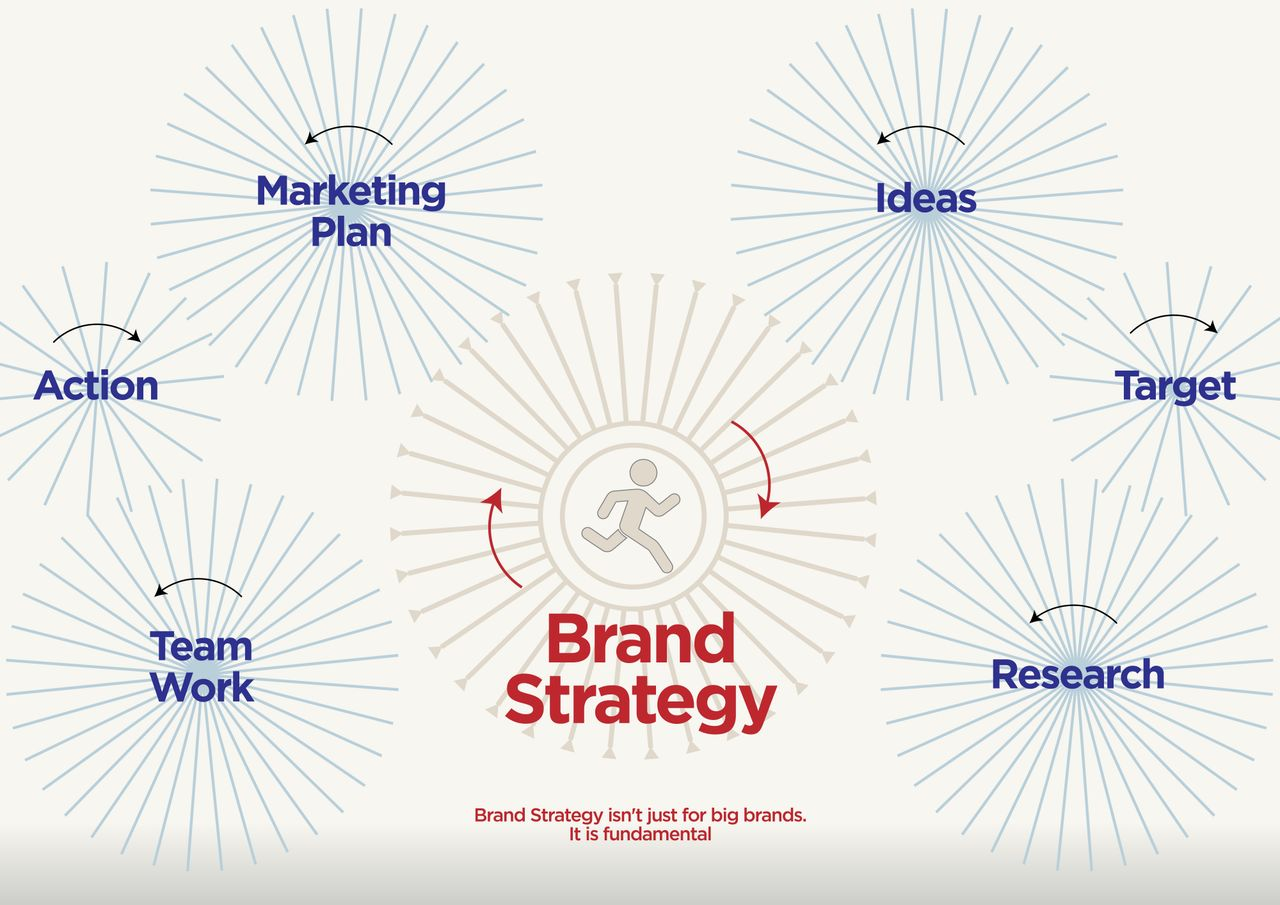
Small businesses often overlook the power of brand strategy, viewing it as an investment reserved for global corporations. With limited resources, they tend to prioritise immediate sales, product development, or marketing campaigns.
But the reality is the opposite. Smaller brands often need a strategy even more.
Research from Forbes shows that consistent brand presentation can increase revenue by up to 23 per cent. Yet many businesses still treat branding as a collection of logos, colours, and marketing campaigns rather than a strategic framework.
Without a clear brand strategy and positioning, companies risk spending time and money on marketing that lacks direction. Messaging becomes inconsistent, campaigns change frequently, and customers struggle to understand what makes the brand different.
A strong brand strategy provides clarity. It defines how a brand competes in the market, communicates with customers, and differentiates itself from competitors. Many organisations work with branding consultants or brand agencies in Singapore to develop this strategic foundation before scaling their marketing efforts.
This guide explains what brand strategy and positioning mean, why they matter for businesses of all sizes, and how you can start building a strategy that actually supports long-term growth. Read on to take the first step toward strengthening your brand.
Key Takeaways
- Brand strategy and positioning define how a business stands out, communicates, and competes.
- Clear positioning makes brands more recognisable and competitive in crowded markets.
- A strong brand strategy directs marketing, messaging, design, and customer experience.
- A structured brand strategy helps small businesses maximise limited resources.
- Many companies work with a branding consultant, an agency specialising in branding, or a Singapore-based branding company to develop a clear strategic brand foundation.
What Is Brand Strategy and Positioning?
Brand strategy is the long-term plan that defines how a brand builds recognition, trust, and differentiation in the marketplace. It establishes the brand’s purpose, audience, values, messaging, and personality.
A strong strategy answers several key questions:
- Who is the brand for?
- What problem does it solve?
- Why should customers choose it over competitors?
- What brand promise and personality define the brand?
Brand positioning, meanwhile, focuses on how the brand is perceived relative to competitors. It defines the unique space a brand occupies in its audience’s minds.
While brand strategy provides the overall framework, positioning defines the brand’s competitive advantage within that framework.
Businesses often collaborate with either a brand design consultant or a branding expert in Singapore, two professionals who help ensure that their strategy aligns with visual identity and communication.
Brand Strategy vs Marketing Strategy
Brand strategy and marketing strategy are often confused, but they serve different roles.
| Brand Strategy | Marketing Strategy |
| Defines brand identity and positioning | Focuses on campaigns and promotion |
| Guides messaging and perception | Drives traffic and leads |
| Long-term strategic direction | Short-term tactical execution |
Brand strategy acts as the foundation. Marketing campaigns then build on that foundation. Without a strategy, marketing efforts often become inconsistent or ineffective.
Why Small Brands Cannot Afford to Skip Brand Strategy
Many entrepreneurs believe brand strategy can wait until the business grows. In reality, the lack of a clear strategy often leads to scattered marketing, inconsistent messaging, and wasted resources. For small brands with limited budgets, this can quickly become costly.
A strong brand strategy helps the business define who it serves, what it stands for, why customers should choose it, and how it should show up consistently across every touchpoint. At EQ Brand, this is guided by the Brand DNA® 5Ps framework: Purpose, Positioning, Personality, Promise, and Platform.
Together, these elements give small brands the clarity they need to compete with focus, communicate with confidence, and grow without losing consistency.
Limited Marketing Budgets Require Focus
Smaller businesses rarely have the advertising budgets of larger competitors. Every campaign, design decision, and communication channel needs to work harder.
A clear brand strategy helps ensure marketing resources are focused on the right audience, message, and market position. Instead of trying to appeal to everyone, small brands can concentrate on the customers who are most likely to value what they offer.
This is where Purpose and Positioning become especially important. Purpose clarifies why the brand exists and who it serves, while Positioning defines the space the brand should own in the market.
Clear Positioning Helps Smaller Brands Compete
Small brands do not need to outspend larger competitors to be remembered. They need to be clear about what makes them relevant, distinct, and valuable.
Strong Positioning helps a business own a specific space in the customer’s mind. This may be based on a niche audience, a specialist product, a distinctive experience, a strong belief, or a unique way of solving a problem.
Rather than chasing every possible customer, effective positioning helps smaller brands focus on the people who are most likely to connect with their offer. This gives the brand a sharper message and a clearer reason to be chosen.
Consistency Builds Trust Faster
Customers are more likely to trust brands that communicate consistently. When a brand’s Personality, Promise, and Platform are aligned, it becomes easier to recognise, remember, and trust.
Personality shapes how the brand speaks, behaves, and expresses itself. Promise defines what customers can expect from the brand.
The platform brings the strategy to life across key touchpoints, including the words the brand uses, its visual identity, campaigns, website experience, packaging, and customer interactions.
For growing businesses, this consistency is especially important. Without a clear brand strategy, different teams, agencies, or marketing channels may present the brand in different ways. Over time, that can make the business feel fragmented.
Many growing businesses work with a Singapore brand agency or consultant early on to establish clarity before inconsistencies become harder to fix.
A strong strategy gives small brands a foundation they can build on, helping them grow with a clearer identity, sharper communication, and stronger customer trust.
Key Elements of a Strong Brand Strategy
A strong brand strategy is built on several interconnected elements that work together to shape how a brand is perceived in the market. These components provide the strategic foundation that guides messaging, marketing activities, customer experience, and brand identity.
When these elements are clearly defined, they help ensure that every brand interaction conveys a consistent, meaningful message.
Brand Purpose
Brand purpose defines why the organisation exists beyond simply selling products or services. It reflects the broader impact the company hopes to have on its customers, the industry, or society.
A clearly defined purpose guides strategic decisions and ensures the brand’s actions align with its values. It also helps customers connect with the brand on a deeper level, particularly in industries where consumers increasingly seek brands that stand for something meaningful.
Target Audience
Understanding the target audience is one of the most important parts of brand strategy. Brands must clearly identify who their ideal customers are, what challenges they face, and what motivates them to make purchasing decisions.
This often involves analysing demographic characteristics, behaviours, and customer needs. By defining a specific audience, brands can tailor their messaging, tone, and marketing efforts to resonate more effectively with the people they want to reach.
Brand Personality
Brand personality is shaped by the values a brand holds. Values define the principles and beliefs that guide how the brand behaves, communicates, treats customers, and makes decisions. They signal what the brand stands for and help build trust when reflected consistently across both messaging and action.
Brand personality translates these values into a recognisable communication style. Just as people have distinct personalities, brands express traits such as confidence, warmth, authority, playfulness, or innovation through their tone, visuals, and customer interactions.
A clear set of values provides the foundation, while a consistent personality ensures the brand feels familiar, authentic, and recognisable across marketing channels.
Competitive Brand Positioning
A strong brand strategy clearly explains how the brand stands apart from competitors. This differentiation may come from product innovation, pricing strategy, customer experience, values, or a unique point of view.
Without clear differentiation, brands risk blending into a crowded market. Effective positioning highlights the aspects of the brand that make it distinctive and valuable to customers.
Brand Promise
The brand promise defines the core commitment a company makes to its customers. It represents the value customers can expect every time they interact with the brand.
This promise often becomes the foundation for marketing messages and customer experience strategies. When consistently delivered, it helps build credibility and long-term loyalty.
Brand Story
The brand story explains the brand’s origin, mission, and purpose in a way that resonates with customers. Rather than focusing solely on products or services, a compelling brand story highlights the motivations and journey behind the brand.
A well-crafted brand story helps humanise the brand and makes it easier for customers to connect emotionally with what the company stands for.
Together, these elements form the strategic foundation that shapes how a brand communicates, competes, and grows over time. Start building your brand’s foundation now to shape its future success.
How Brand Positioning Works in Practice
Image Credit: Genspark Generated AI Infographic
Brand positioning transforms strategy into messaging that customers can understand.
One widely used method is the positioning statement.
Example structure:
- For [target audience],
Our brand is [category]
That delivers [key benefit]
Because [reason to believe].
This simple framework clarifies how the brand differentiates itself.
Once positioning is defined, companies typically develop a messaging framework that includes key messages, brand narratives, and communication pillars.
Many organisations collaborate with brand consultants or branding agencies to ensure these frameworks guide all marketing communications.
How a Branding Agency Develops Brand Strategy and Positioning (step by step)
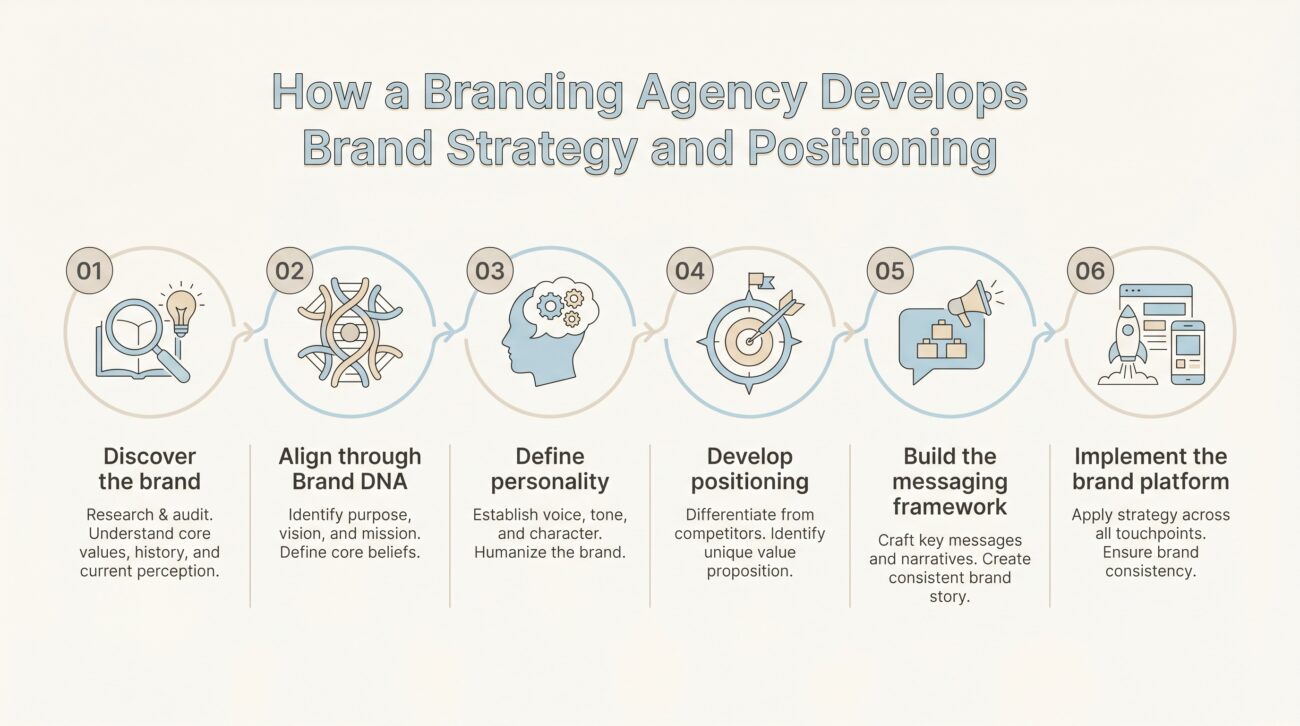
Developing an effective brand strategy and positioning is not simply about choosing a tagline, updating a logo, or deciding how a brand should “look”. A strong branding process starts by understanding what sits beneath the surface of the brand: its purpose, values, market role, customer expectations, internal culture, and long-term business direction.
As discussed in our earlier article on how branding and creative agencies guide rebranding success, rebranding is more than a cosmetic exercise. At EQ Brand, we anchor every brand strategy in our proprietary Brand DNA® model — a framework we’ll walk through in detail below.
This helps ensure that brand strategy is not built on assumptions, but on a clear understanding of what the brand stands for, how it should compete, and how it should be expressed consistently.
While the exact process may vary by organisation, most professional branding agencies follow a structured, collaborative approach.
Step 1: Brand Discovery and Research
The process begins with discovery. This stage helps the branding agency understand the business, its audience, its competitors, and its current market perception.
Research may include competitor audits, stakeholder interviews, customer insights, market analysis, brand audits, and reviews of existing communications. The goal is to understand where the brand currently stands, what customers expect, what competitors are saying, and where opportunities for differentiation exist.
This step is important because brand strategy should not be based only on internal opinions. A strong strategy needs to be grounded in real insights about the business, the market, and the people the brand wants to reach.
Step 2: Brand DNA® Workshop and Stakeholder Alignment
Once the research foundation is established, the agency works with key stakeholders to define the brand’s core elements. At EQ Brand, this is often done through our Brand DNA® workshop, where we help leadership teams clarify five essential areas:
| Brand DNA® Element | What It Defines |
| Purpose | What the brand does, who it serves, and why it exists beyond its products or services |
| Positioning | Why customers should choose the brand and how it stands apart from competitors |
| Personality | The human traits that make the brand relatable, recognisable, and consistent |
| Promise | The truths and commitments the brand must deliver consistently |
| Platform | The tangible expression of the brand, from visual identity to brand architecture |
This stage is especially important because a brand strategy must guide more than marketing. It should influence communication, customer experience, internal alignment, and business decision-making. Workshops help ensure that leadership teams are aligned before the brand is expressed externally.
Step 3: Brand Personality Definition
Brand personality is shaped by the values a brand holds. Values define what the brand believes in and how it behaves, while personality defines how the brand expresses those beliefs humanly and recognisably.
During this stage, the agency helps clarify the principles that guide the brand’s decisions, communication, and customer relationships. These values may reflect qualities such as trust, innovation, care, craftsmanship, clarity, or progress.
Brand personality then translates those values into tone, behaviour, and expression. For example, a brand may be confident and authoritative, warm and approachable, refined and premium, or bold and innovative. Defining this clearly helps ensure that messaging, visuals, campaigns, and customer interactions feel consistent across every touchpoint.
Step 4: Positioning Development
With research insights and stakeholder input in place, the agency develops the brand’s positioning. This is where the brand’s market role becomes clearer.
Positioning defines the space the brand should own in the minds of its audience. It answers questions such as:
- Who does the brand serve?
- What problem does it solve?
- What makes it different from competitors?
- What should customers remember the brand for?
- Why should people trust or choose it?
The outcome is often a positioning statement or strategic narrative that explains who the brand is for, what it offers, and why it is meaningfully different. A strong positioning strategy helps the brand communicate with clarity instead of trying to appeal to everyone.
Step 5: Messaging Framework Creation
Once positioning is clear, the agency translates it into a messaging framework. This framework ensures that the brand’s strategy can be communicated consistently across channels.
A messaging framework may include:
- Core brand message
- Brand story
- Key communication pillars
- Audience-specific messages
- Proof points
- Tone of voice principles
- Tagline or campaign direction
- Key phrases to use and avoid
This stage is important because strategy only becomes useful when teams can apply it. A clear messaging framework helps guide website copy, sales materials, social media content, advertising campaigns, internal communications, and customer-facing brand stories.
Step 6: Brand Platform and Implementation
The final stage is implementation. This is where strategy becomes visible and actionable across the brand’s touchpoints.
Implementation may include visual identity development, brand guidelines, brand architecture, website messaging, campaign concepts, customer experience principles, internal launch materials, and rollout planning.
A strong brand platform ensures that the brand is not only well-defined on paper but consistently expressed in the real world. This is especially important during rebranding, where customers and internal teams need to understand what has changed, what remains familiar, and why the new direction matters.
When executed properly, this structured process helps businesses build a brand that is clear, distinctive, consistent, and future-ready. It also ensures that the brand’s strategy, personality, message, and identity work together rather than existing as separate pieces.
Examples of Strong Brand Strategy and Positioning
Some of the most recognisable companies in the world have built their success on a clearly defined brand strategy and positioning. Instead of trying to appeal to everyone, these brands focus on a distinctive value proposition and communicate it consistently across every touchpoint.
The following examples illustrate how strategic positioning shapes messaging, marketing, and brand perception.
Patagonia
Patagonia has positioned itself as a brand deeply committed to environmental responsibility and sustainability. Rather than focusing solely on outdoor apparel performance, the company has built its brand identity around environmental activism and responsible consumption.
One of Patagonia’s most notable campaigns, “Don’t Buy This Jacket,” encouraged consumers to consider the environmental impact of purchasing new products. This bold message reinforced the brand’s commitment to sustainability while strengthening its credibility among environmentally conscious customers.
By aligning its products, messaging, and corporate actions with this positioning, Patagonia has built a loyal community of customers who share similar values.
Tesla

Tesla’s brand strategy positions the company as an innovator at the intersection of technology, sustainability, and transportation. Instead of competing solely as a car manufacturer, Tesla presents itself as a technology-driven company transforming the future of mobility.
Its messaging consistently emphasises innovation, clean energy, and advanced engineering. This positioning allows Tesla to stand apart from traditional automotive brands and attract customers who associate the company with technological leadership.
Tesla’s brand strategy extends beyond vehicles to include renewable energy products, reinforcing its broader mission of accelerating the transition to sustainable energy.
Dollar Shave Club
Dollar Shave Club successfully disrupted the shaving industry by positioning itself as a convenient and affordable alternative to traditional razor brands.
The company’s launch campaign, “Our Blades Are F*ing Great,” quickly went viral and introduced the brand with a humorous and irreverent tone. This messaging helped differentiate the brand from established competitors that focused heavily on product technology and premium pricing.
By emphasising simplicity, affordability, and convenience through a subscription model, Dollar Shave Club created a clear value proposition that resonated strongly with customers.
Signs Your Brand Needs a Clear Strategy
Many businesses only recognise the importance of brand strategy and positioning after encountering challenges with marketing, messaging, or customer perception. When a brand lacks a clear strategic foundation, communication becomes inconsistent, making it difficult to stand out in a competitive market.
The following signs may indicate that a business needs to revisit its brand strategy.
Inconsistent Marketing Messages
If marketing campaigns, website content, and social media communication all convey slightly different messages, customers may struggle to understand what the brand actually stands for.
Inconsistent messaging often occurs when there is no clear brand positioning guiding how the brand communicates. A defined strategy helps ensure that every campaign reinforces the same core message.
Difficulty Explaining the Brand’s Promise
When team members struggle to explain what makes the brand unique, it often signals that the brand’s positioning has not been clearly defined.
A strong brand strategy should make it easy to answer questions such as what the brand offers, who it serves, and why customers should choose it over competitors.
Lack of Differentiation From Competitors
In crowded markets, many brands offer similar products or services. Without clear differentiation, customers may struggle to see why one brand is more valuable than another.
Brand positioning helps define the unique perspective or advantage that separates a brand from competitors.
Scattered Marketing Campaigns
When marketing activities feel disconnected or change direction frequently, it often indicates that campaigns are being developed without a clear strategic framework.
A well-defined brand strategy ensures that marketing initiatives are aligned with a consistent long-term vision.
Weak Brand Recognition
If customers rarely remember or recognise the brand after encountering it, the brand may lack a distinctive identity.
Strong brand recognition typically develops when positioning, messaging, and visual identity all work together to create a consistent impression.
Businesses experiencing these challenges often benefit from working with a branding consultant to develop a structured strategy that aligns messaging, positioning, and marketing efforts.
Building a Brand That Actually Stands for Something
Brand strategy and positioning are not luxuries reserved for global corporations. In reality, smaller brands often benefit even more from strategic clarity because every marketing effort, campaign, and customer interaction must work harder to generate results.
A well-defined brand strategy helps businesses communicate clearly, differentiate themselves from competitors, and build stronger connections with their audience.
Instead of relying on scattered marketing tactics, companies with a clear strategic foundation can align their messaging, marketing activities, and brand identity around a consistent direction. Over time, this consistency strengthens recognition, trust, and long-term brand equity.
For businesses that want to compete more effectively, investing in brand strategy is not simply a branding exercise. It is a strategic decision that shapes how the brand grows, communicates, and creates value in the market.
If you are looking to refine your brand strategy or clarify your positioning, working with experienced brand consultants can help uncover the opportunities that set your brand apart.
You can learn more about strategic branding services from a brand agency in Singapore or get in touch with the team directly. Contact us today! Start building a stronger, more distinctive brand.
Frequently Asked Questions About Brand Strategy and Positioning
How often should a company review its brand strategy?
Brand strategy should be reviewed periodically to ensure it remains aligned with business goals and market conditions. Many organisations revisit their brand strategy every three to five years, or sooner if the company undergoes major changes such as entering new markets, launching new products, or repositioning against competitors.
Can brand strategy change over time?
Yes, brand strategy can evolve as markets, customer expectations, and business objectives change. While the core brand purpose and values usually remain consistent, positioning and messaging may be refined to reflect new opportunities or a changing competitive landscape.
What is the difference between brand identity and brand strategy?
Brand strategy defines the long-term direction and positioning of the brand, including its purpose, audience, and competitive advantage. Brand identity refers to the visual and verbal elements that represent the brand, such as logos, colours, typography, and tone of voice.
How does brand strategy influence marketing campaigns?
Brand strategy acts as the foundation for marketing activities. It defines the brand’s messaging, tone, and value proposition, ensuring that marketing campaigns communicate a consistent, compelling narrative across channels.
Is brand strategy only relevant for new businesses?
No. Established companies often revisit their brand strategy when they want to reposition their brand, expand into new markets, or strengthen their competitive advantage. A refreshed brand strategy can help businesses remain relevant as industries evolve.

