What’s the Future of Branding?
Branding is changing faster than ever, shifting from identities created by brand owners to living organisms that customers actively shape, share, and inhabit. This article explores the key trends already redefining what brands are, how they’re built, and why the future of branding is less about control and more about connection and co-creation.
Once upon a time, branding was a physical act. Cattle owners took a metal branding iron, heated it in a fire, and burned a mark in their cow’s hide to distinguish their herd from everyone else’s. As crude as it sounds, the logic was clear: branding was about differentiation.
Today, branding still does the same job – at it’s root its still about differentiation. But it’s come a long way since scorched hides and ranch insignia. It’s moved from branding products to branding experiences, and from something dictated by brand owners to something increasingly shaped, shared, and curated by customers themselves. So far so good, but where is branding heading next? That’s the question this article sets out to explore.
It’s a good question to ask because branding is always evolving. In fact, one of the few constants of branding is that it is constantly evolving. Differentiation remains at its core—but what it means to be different, how that difference shows up, and who gets to define it have all changed dramatically. To understand where branding is heading, we first need to look at the forces already pushing it forward.
A useful way to think about “the future” comes from speculative fiction writer William Gibson, who famously said, “The future is already here—it’s just not very evenly distributed.” In other words, the future is already taking shape around us—in emerging trends, technologies, and experiments that are happening right now. And it’s these clues that offer a roadmap of what’s coming up next.
Take the rise of AR, VR, AI, and sonic branding. Together, they point towards a future where brands are less about static logos and more about self‑expression, connection, and lived experience. Branding is becoming the “interface” where people explore who they are, where they belong, and what matters to them.
Because of this, brands are expected to work on several levels at once. On the sensory level, they appeal to what we see, hear, touch, taste, and smell. On the emotional level, they offer comfort, joy, belonging, purpose—even a sense of hope or transformation. More and more, brands are not just things we buy, but life stories we step into.
Brand thinker Marty Neumeier, in Brand Flip, describes this as a shift in power from companies to customers. Brands are now defined less by what brand owners claim and more by what customers experience and share with each other. Features and specs still matter, but many people care more about how a brand feels, what it stands for, and whether it fits their values. Brands are less “sold” and more “chosen”—often approved in advance as an identity badge by online ‘tribes’, before anyone clicks “buy”.
Yet not every prediction about the future of branding has aged well. Some bold ideas sounded convincing, but faded when they hit real life. Naomi Klein’s No Logo predicted that brand power would be pulled away from big global players and democratised into a more citizen‑controlled system. Jasmine De Bruycker, in her essay “The Future of Branding Is Debranding”, suggested commercial branding would give way to label‑free stores and hand‑picked experiences run by trusted shopkeeper-curators. Berlin’s Original Unverpackt, Belgium’s Graanmarkt 13 and Japan’s Muji (whose name literally means “No-brand quality goods”) are all expressions of this trend.
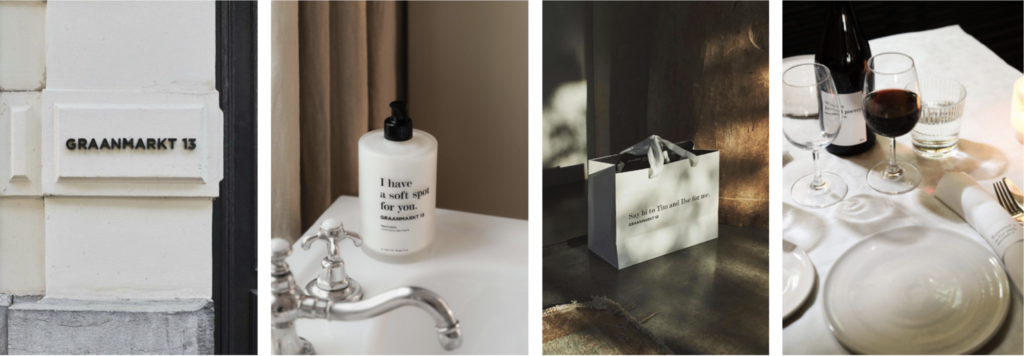
Above: Belgian brand Graanmarket 13 where all the products such as wines, soaps, china, cutlery, and furnishings are curated by the owners, with their own low-key branding applied to everything, and sold in their own ‘open-home’ as a kind of stage.
So, were Klein and De Bruycker right? In some ways, yes. Branding has become more citizen‑ centred, more focused on values, and much more participatory – and this trend seems to be increasing. People and the communities they belong to now play a huge role in shaping what brands mean. Brands are judged not just on performance, but on ethics and behaviour. But branding itself didn’t vanish. It evolved. Instead of giving up power, brands learned to share it. They responded to criticism, learned the language of activism, and experimented with co‑creation.
What Klein and De Bruycker didn’t fully account for was branding’s ability to adapt as a living, flexible system. In other words, global branding didn’t die. It shifted—becoming more complex, more connected, and more human in the ways it shows up. And that shift is still ongoing. So the future of branding isn’t about having less branding; it’s about having smarter, more emotionally aware branding.
We’ve identified seven trends either emerging now or already well established that indicate where branding is heading next—and what is likely to shape successful brands in the years ahead.
1. Branding is co-created, not owner-managed
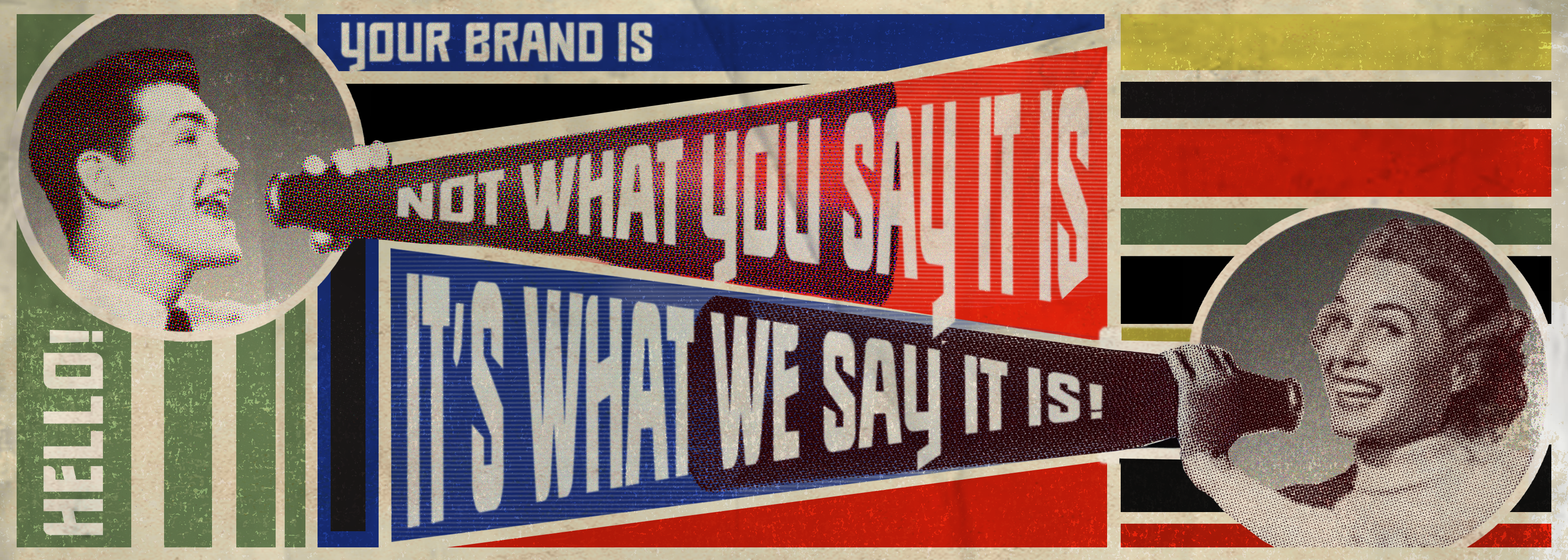
Back in 2003, branding thinker Marty Neumeier predicted a future where a brand would be defined “not by what you say it is, but by what they say it is.” In other words, as the internet and social networks grew, brand power would slowly shift away from companies and toward the people who actually use, talk about, and remix brands. That shift took time—but Neumeier was bang on the money, and one major accelerator was Covid. As shopping, socialising, and discovering brands moved online almost overnight, customer voices became louder, faster, and harder to ignore.
Instead of acting like broadcasters, brand owners today need to behave more like editors and curators. Creators, customers, influencers, and communities all add their own voice, and together they decide what a brand really stands for. In this world, it’s not enough to ask, “Who are we?” The better question is, “Who are we becoming together with our customers?”
You can see this in brands that invite people into the process: asking fans to submit ideas, vote on designs, or even collaborate on new products. Campaigns are co‑designed, packaging is crowdsourced, and launches are shaped in real time by feedback and participation. For example LEGO, who give their customers tools to design new products and ideas that influence its R&D. This is branding as dialogue, not monologue.
So while Naomi Klein’s predicted “citizen-centered” approach to branding didn’t happen, ironically branding has internalized the citizen voice and made it part of the brand story. Which leads us to the next trend:
2. Brand success is increasingly driven by tribes
Traditional thinking said brands win by buying attention: advertising, digital campaigns, reviews, and paid influencers. Those things still matter, but people are far more sceptical about how genuine they are. When everything looks sponsored, we lean back on the people and groups we actually trust.
Those groups—our “tribes”—can be close friends and family, but also online communities, fandoms, and niche interest groups. Group chats, private servers, and small communities now shape what feels cool, credible, or worth trying. A recommendation from your circle often beats a glossy ad.
The smartest brands don’t attempt to create tribes from scratch. Instead, they notice where real communities already exist, support them without taking over, and accept a hard truth: trust is slow to build and very easy to lose. Rather than seeing branding as something they project outward, companies are starting to understand their brands as inseparable from the communities they attract and care for. In this future, the most valuable brand asset won’t be a logo, tagline, or campaign—but an engaged group of people who tell the brand’s story in their own words.

Above: Brands like Glossier and Gymshark grew not through traditional advertising, but through tightly knit communities of loyal users who became advocates. Subcultures on Discord, WhatsApp, and Substack now influence brand perception more than public comment feeds.
3. Global brands are becoming rounder, not flatter
Back in 2007, political commentator Thomas Friedman famously described globalisation as “flattening” the world. That idea shaped how many brands thought about growth: be consistent everywhere, look and sound the same in every market, and scale fast. For a while, that approach worked. But in today’s world—especially with the rise of Asia and its cultural richness—flat thinking no longer makes sense.
Despite this, many global brands still confuse localisation with simple translation. Swapping languages or faces isn’t enough. The real challenge is cultural. How do you create a brand that feels genuinely local in many different places at once, without losing its identity or becoming fragmented?
The answer lies in going “round” instead of flat. Round brands are built to flex – to express the same core idea in different ways, depending on local realities. That means treating local creativity as a strength, not a threat.
The brands that will succeed across Asia are those that think beyond one-way marcomms and apply an on-the-ground understanding of how their brand is perceived, region by region. And the same goes for Asian brands that seek to penetrate Western markets – what works in Asia won’t work in America. Global Asian brands like Japan’s Uniqlo and Korea’s K-Beauty already seem to get it.
As new economic and cultural centres emerge, Asia is no longer just a growth market—it’s becoming the creative engine of the next global brand era. For brands that truly understand its complexity, the future is no longer flat, it’s round.
4. AI Is Reshaping How Brands Are Experienced
AI can feel overhyped, confusing, or even a little intimidating—but quietly, it’s already become one of the most powerful forces shaping brands today. And not just behind the scenes. AI now affects how brands are discovered, recommended, and even created. Search results, design tools, copywriting, customer service, and personalisation are increasingly guided by machine intelligence.
The reason is simple: AI enables a level of personalisation that was previously impossible. Brands can now anticipate needs before customers clearly express them, then deliver tailored experiences in real time. Conversational AI, voice interfaces, and branded GPTs are turning brands into always-on companions—responsive systems that guide people smoothly from curiosity to decision.
But there’s a risk. If everyone uses the same tools in the same way, brand experiences can start to feel bland and interchangeable, and both differentiation and the human touch are lost. In a world where everything sounds and looks “AI‑generated”, nothing stands out. The challenge is for brands to use AI as an enabler of human creativity, not a replacement: to let it handle the heavy lifting in the background while keeping a clear, human voice and point of view.
For example, Netflix similarly uses recommendation algorithms to shape a uniquely tailored homepage for every user—making the brand feel intuitive and individual rather than generic, and Sephora’s AI-powered virtual try-on tools transform beauty retail into an interactive, confidence-building experience.
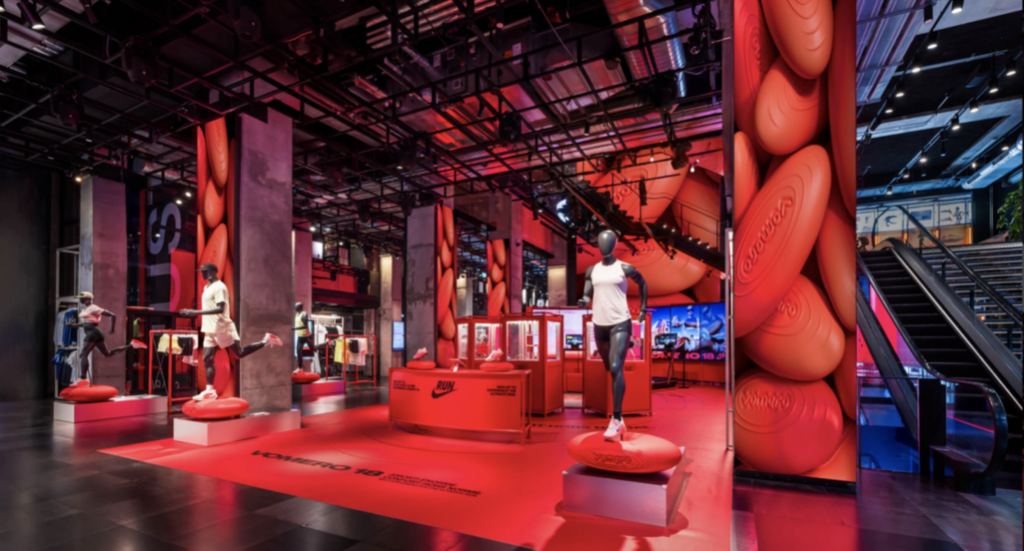
Above: Nike’s Vomero 18 being launched at their European flagship store on the Champs-Elysées in Paris last year. The post Covid period has seen a big comeback of retail spaces bring together physical, digital, and sensory elements in a multi-dimensional customer experience.
5. The human experience is centre stage, once again
One of the more surprising reversals accelerated by Covid is this: physical spaces and human interaction didn’t disappear. They came back stronger—and smarter. For a while, it looked like online retail and digital platforms would replace shops, events, and face-to-face service altogether. Instead, the opposite happened. The human experience didn’t just return; it was reimagined.
At first, physical spaces came back as experiential showrooms—places to see and try a brand. Now they’re evolving into something richer: relational environments. As digital interactions become faster and smoother, real-world encounters carry extra emotional weight. Stores, events, and human service moments have become trust builders, cultural stages, and make-or-break touchpoints. You still can’t smell, touch, or truly feel a brand online—and in an AI-heavy world, those human moments are a powerful differentiator.
So the brands that will grow are the ones that stop treating physical and digital as separate channels. Instead, they design them as one connected system. Apple’s stores, for example, function as spaces for learning, exploration, and community—not just places to buy products. Brands like Nike and Muji use physical spaces to express their values and lifestyle in ways no screen can fully capture.
But the future isn’t simply about going “back” to physical. It’s about blending physical, digital, and sensory experiences into something seamless. From haptic feedback to mixed-reality retail, brands are starting to surround people with adaptive, real-time experiences. Over the next decade, the brands that win won’t necessarily be the most high-tech—but the ones that feel the most human.
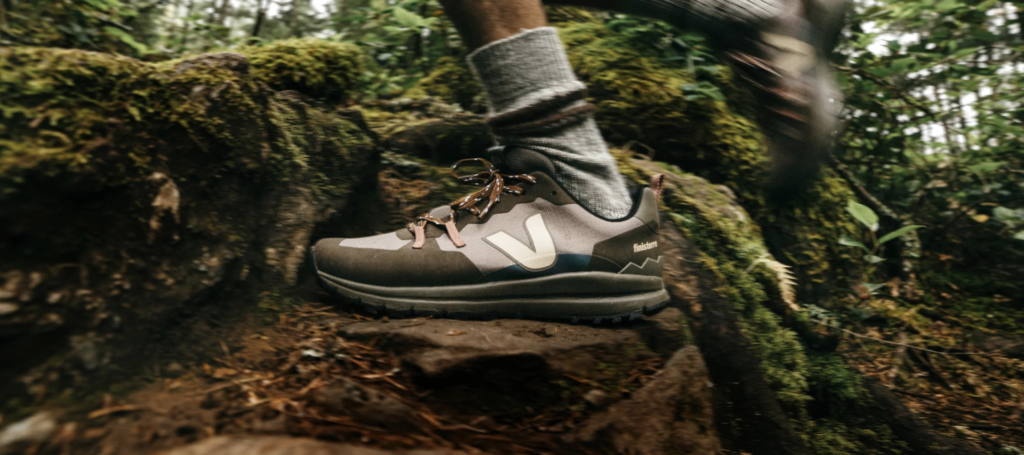
Above: The Brazilian trainer brand Veja deliver on their values: they use organic cotton, fair labour, and Amazonian wild rubber in their shoes, all of which supports indigenous producers, and offer to repair or recycle their customer’s shoes, extending their lifecycle and reducing waste.
6. Brands are about behaviours, not just ‘values’
Today, people don’t judge brands by what they say—they judge them by what they do. Authenticity on its own isn’t enough anymore. Accountability has become the real brand currency. For Gen Z and Gen Alpha especially, values like ethics, wellbeing, social impact, and sustainability aren’t nice extras—they’re expected. These concerns have shifted from differentiators to basic requirements.
As a result, branding has moved from storytelling to storydoing. It’s no longer about crafting the perfect message; it’s about aligning internal behaviour with external promises. At the same time, people are quick to spot empty gestures—like greenwashing or one‑off “cause” campaigns that don’t match the rest of the business. The shift is from values as marketing to values as the way the organisation is actually built, and operates.
The Brazilian trainer brand Veja is a good example: they are very transparent about their pricing, materials, and factories, and don’t spend any money on advertising. Instead they invest in organic cotton, fair labour, and Amazonian wild rubber sourced from indigenous communities, and actively seek to protect the rain forest. They also repair, recycle or resell old trainers, regardless of the brand. These services aim to promote a circular economy by reducing waste and extending the lifecycle of footwear.
In the future, the strongest brands won’t just talk about purpose or responsibility—they’ll be able to back up their words with transparent, verifiable action. Whether it’s climate, fair pay, or privacy, accountability will be a core part of what makes a brand believable.
7. Brands are living organisms, not static systems
Today, brands are behaving less like fixed assets and more like living systems. In a world shaped by AI, automation, and constant feedback, brands aren’t finished objects—they’re ongoing processes. They learn, respond, and evolve alongside the people who use them.
This is why rigid brand rulebooks are starting to fade away. In their place are flexible, modular systems designed to adapt to different cultures, platforms, and conversations. Instead of chasing total control, successful brands aim for coherence—a deeper sense of “this feels like us” that can stretch across formats without snapping.

Above: Coca-Cola has teamed up with Adobe to launch Fizzion—an innovative AI platform that reimagines traditional brand guidelines as smart, flexible assets, enabling design teams to produce branded content up to 10 times faster, while creatively remaining fully in control.
That’s why the idea of a brand playbook has replaced the old brand rulebook. Identity systems are built to evolve. Messaging shifts depending on audience and context. Even logos are becoming dynamic and responsive. Generative design tools and AI-powered platforms like Midjourney, Runway, and Adobe Firefly are accelerating this shift, enabling endless brand expressions that still feel recognisably on-brand.
Coca Cola is a good example, having teamed up with Adobe to launch Fizzion—an innovative AI platform that reimagines traditional brand guidelines as smart, flexible assets enabling design teams across the world to produce branded content that reflects their local context, yet always remains on brand.
Conclusion
Drawing all these thoughts together, we believe the future of branding is exciting – because it’s becoming more complex, more participatory, and more human. Power is being shared. Meaning is being negotiated. Identity is no longer declared—it’s lived.
For designers and emerging practitioners, this makes branding both more challenging and also more creative than ever. Success no longer depends on mastering a single discipline or producing perfect outputs. It depends on curiosity, cultural awareness, empathy, and the ability to design systems that evolve over time. Brands are no longer built once and managed as a static asset. They’re grown.
The future of branding, then, isn’t about less branding—but better branding. More emotionally intelligent branding. The clues are already around us, scattered unevenly across the current branding landscape. The task ahead isn’t to invent the future of branding—but to recognise it, shape it, and help it grow.
Build your brand identity with us: We understand the challenge of creating a compelling brand experience that is both authentic to who you are, and resonates with your customers. With our unrivalled expertise in brand strategy and identity design, and working with brand owners across Singapore, SE Asia and the Middle East, we are able to create inspiring brands and a holistic brand experience, across all channels. If anything in the blogpost above strikes a chord, and you need our assistance, do get in touch with us here.


RELATED ARTICLES